
White-Faced Capuchin
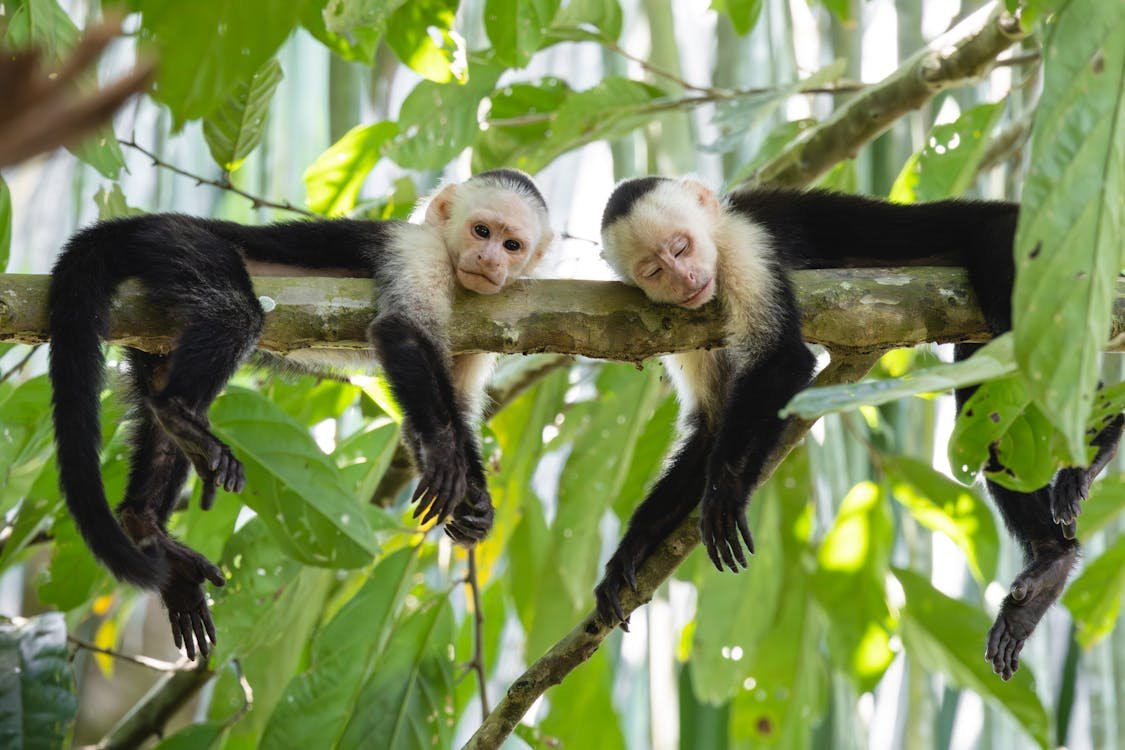
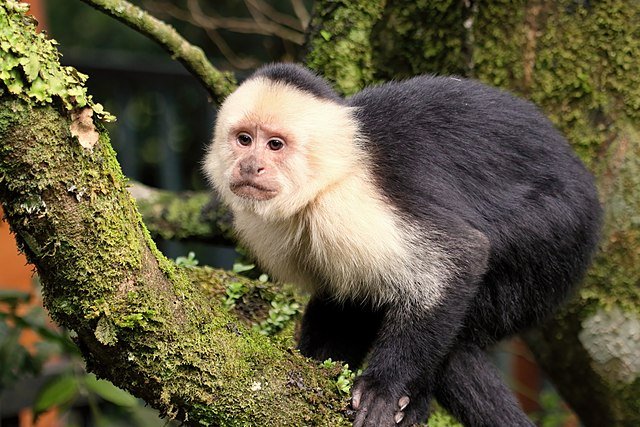
Cute, chirpy, curious, but also sneaky and sometimes downright nasty, the White-Faced Capuchins (or Monos Cariblancos) are a familiar sight in all corners of Costa Ballena. The most common of Costa Rica’s four monkey species, their presence always draws the attention of tourists and visitors who eagerly reach for their phones and cameras to capture the spectacle of a troop moving along the canopies. The locals and more seasoned residents, on the other hand, are a little more weary as sticks or something much worse can come flying at them with little notice!
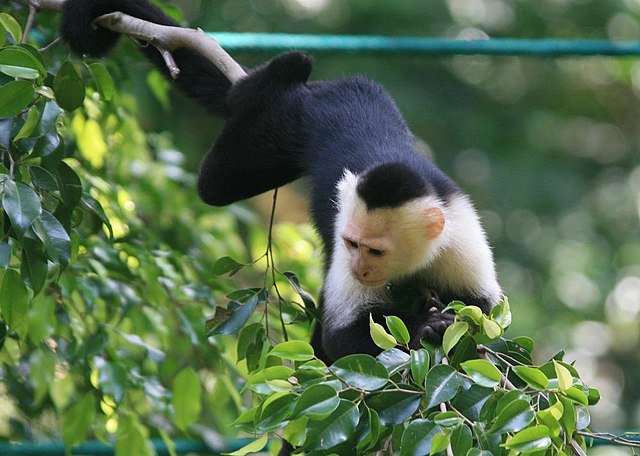
MONKEYS WITH JOBS!
Because of their intelligence, dexterity and quick learning, capuchin monkeys have found fame, fortune and employment in many industries around the world, including Hollywood.
HOLLYWOOD Stars!
White-Faced Capuchins make famous TV stars – Ross, in the show Friends, had a capuchin called Marcel while Jack appeared in numerous Pirates of the Caribbean films as Captain Barbossa’s monkey companion, to name a few.

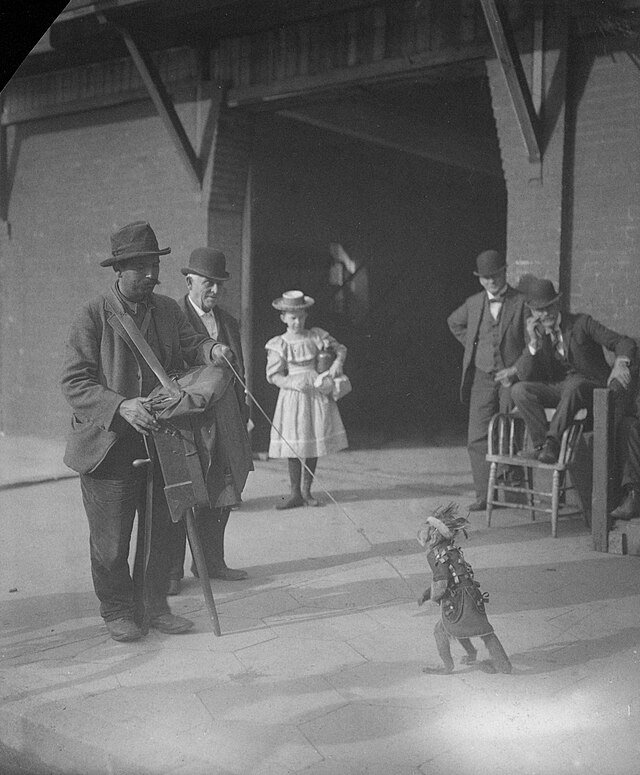
Public Performances
Various capuchin species have found fame and jobs performing alongside organ grinders, being trained to attract audiences and collect money with a hat, or by becoming famous street and circus performers.
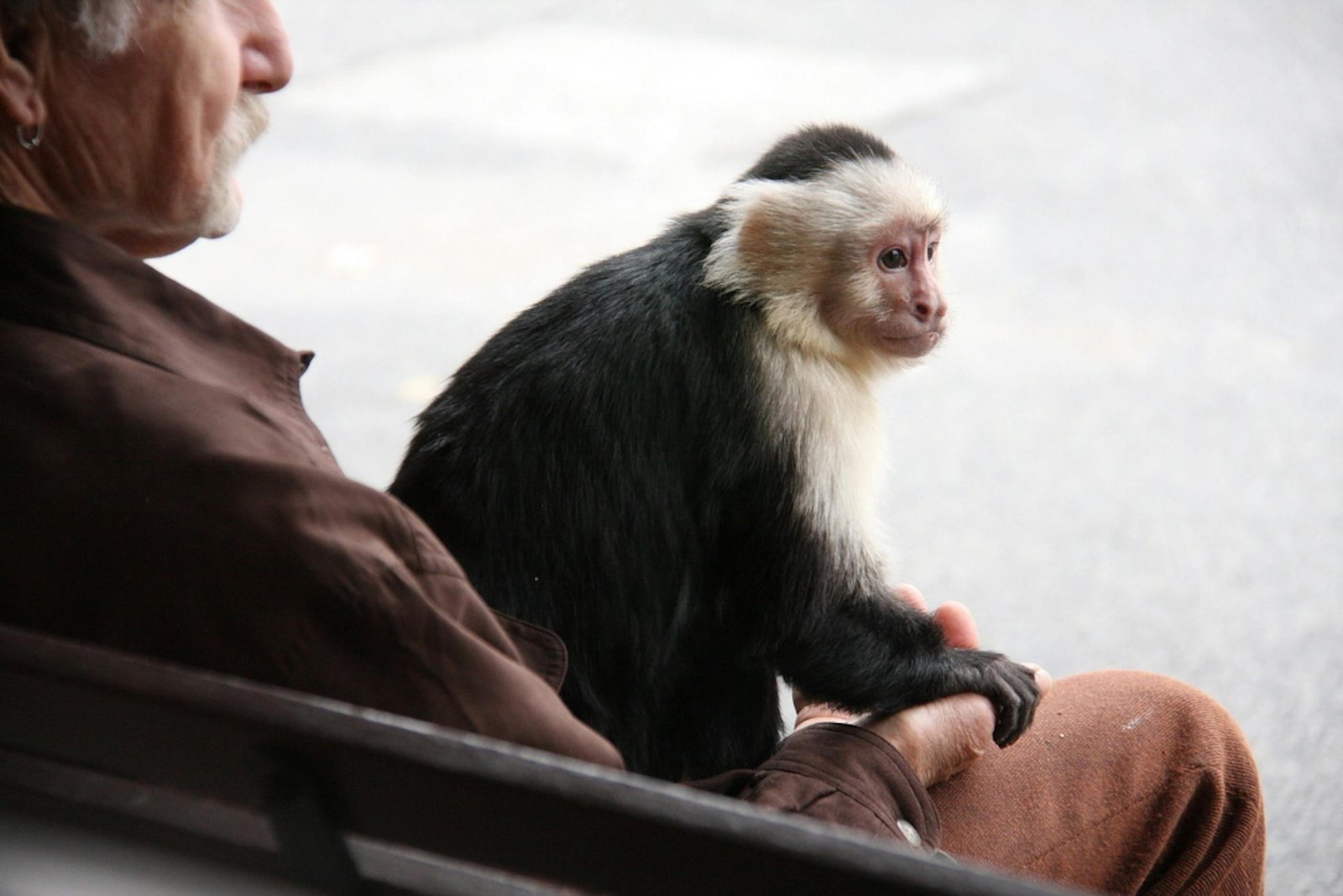
Monkey Helpers
But the most respectable capuchin careers are ‘helper monkey’ jobs – these involve working alongside people who have lost mobility or dexterity. The monkeys help with tasks such as reaching objects, opening or closing doors and cabinets, brushing hair, scratching itches, turning pages in a book, fetching food and drinks, operating devices by pressing buttons, alerting for help, and providing emotional support. Wow!
Monkey Jockeys
One bizarre and long-forgotten profession involved Capuchins riding greyhounds as jockeys during 500-meter races—a practice both cruel and ethically troubling. Trainers strapped monkeys to racing dogs, though how much strategy the primates used remains unclear. The spectacle began in Sydney in the late 1920s and gained traction through the 1930s. Fortunately, public sentiment shifted as animal rights groups protested, and the fad faded by the late 1930s. Still, isolated races persisted, with the last known events taking place in Mexico during the 1970s.
“The monkeys took to the racing with such relish that they actually became highly competitive beasts during races, even being known to use their own tails as an in-built whip to urge an extra effort out of their mount!” – 1930s newspaper article.

Cowboy Monkey Rodeo
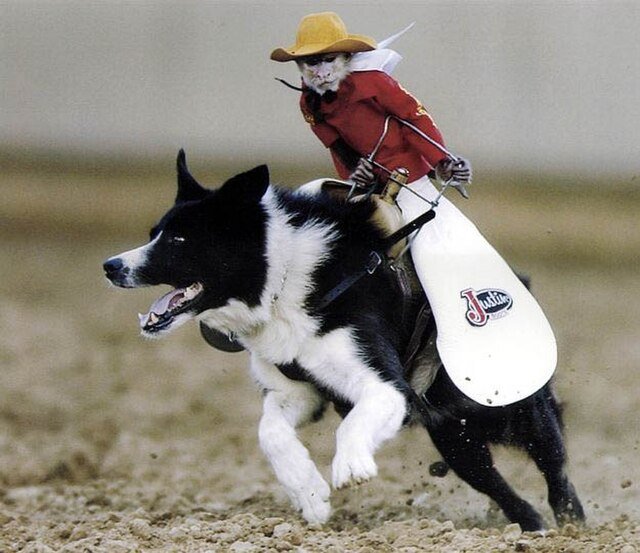
Even today, isolated cases show Capuchins forced to ride dogs at events, parties, and circuses across the globe. In the U.S., a spectacle called the “Cowboy Monkey Rodeo” entertains crowds at Minor League Baseball games. One of its most famous performers, Whiplash—a white-faced Capuchin—travels internationally, riding border collies and herding sheep. He’s appeared in TV commercials, starred on talk shows, and even received knighthood at Minnesota’s St. Paul Winter Carnival.
ABSTRACT ARTISTS
Zoo-kept Capuchins have been employed to paint abstract art – often as a fundraiser. The usual method employed is that of fingerpainting on canvas using oil paint. The art pieces carry a surreal energy and are valued by collectors. Other animals who paint are Chimps, Orangutans, Elephants, Pigs (snout painting vs fingerpainting) and even dolphins!

STONE AGE MONKEYS?
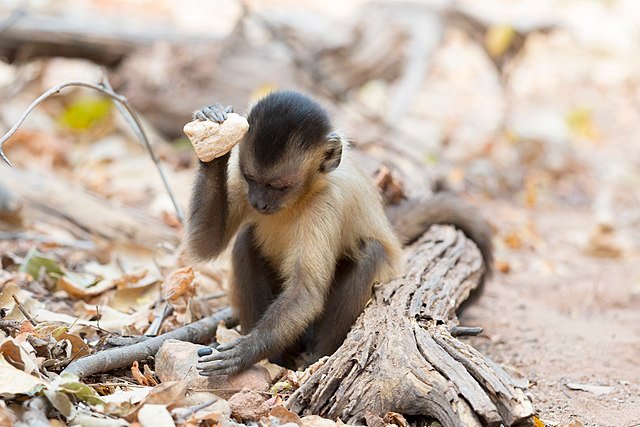
Capuchins rank among the top ten most intelligent primates, with White-Faced Capuchins showing remarkable tool use in the wild. They crack open nuts, beach almonds, coconuts, and the shells of crabs and snails using stones and natural anvils. They also wield sticks to defend against snakes, rescue infants from constricting serpents, and investigate dark crevices or tree hollows. Their ingenuity reflects a sharp mind shaped by survival and curiosity.
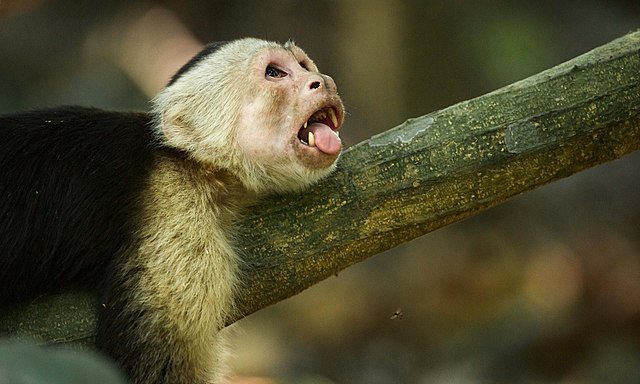
Capuchin monkeys—especially wild populations in Brazil—now join chimpanzees and Burmese long-tailed macaques in what scientists call a non-human Stone Age. These clever primates have used stone tools for over 3,000 years to crack nuts and process food, leaving behind an archaeological record of evolving techniques. Sea otters also belong to this exclusive club, smashing shellfish with rocks balanced on their bellies. Other animals, like crows, dolphins, and elephants, show promising tool use with sticks or found objects, but haven’t yet demonstrated consistent stone-tool behavior. The line between instinct and innovation keeps getting blurrier.
LOOK OUT AND TAKE COVER!
Costa Rica’s Capuchins don’t hesitate to show their displeasure with humans. When provoked, they scream, shake branches, urinate, or hurl sticks, fruit, and even droppings at unlucky tourists—while locals and expats wisely clear out. I once watched entire families at Ventanas Beach quickly pack up and move as a troop of Capuchins advanced through the canopy toward their picnic spots. This behavior isn’t unusual; the monkeys are simply defending their territory and safeguarding their females and young.
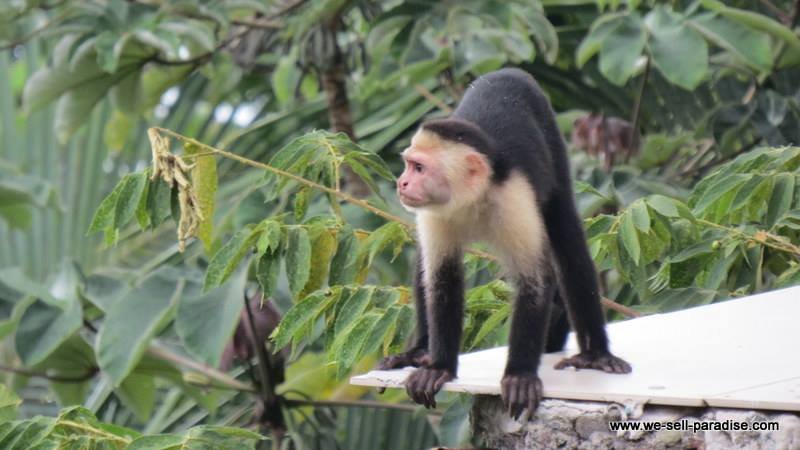
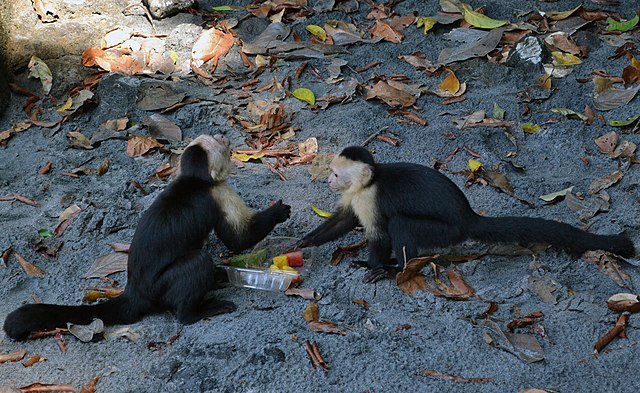
Capuchins grow bold and sometimes aggressive when food enters the picture. In tourist hubs like Manuel Antonio, they stroll into restaurants and snatch meals from startled diners. They also sneak into nearby homes, rifling through kitchens in search of snacks.
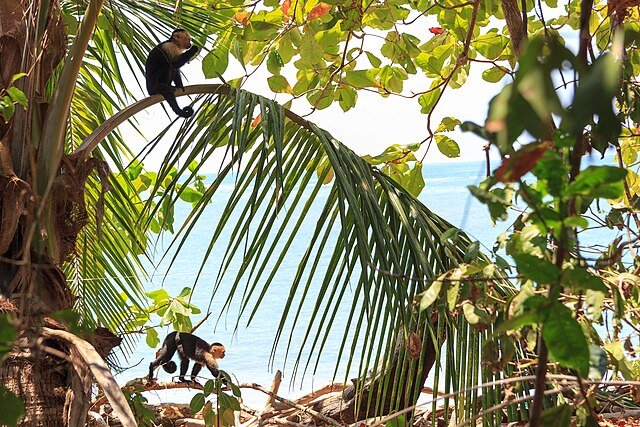
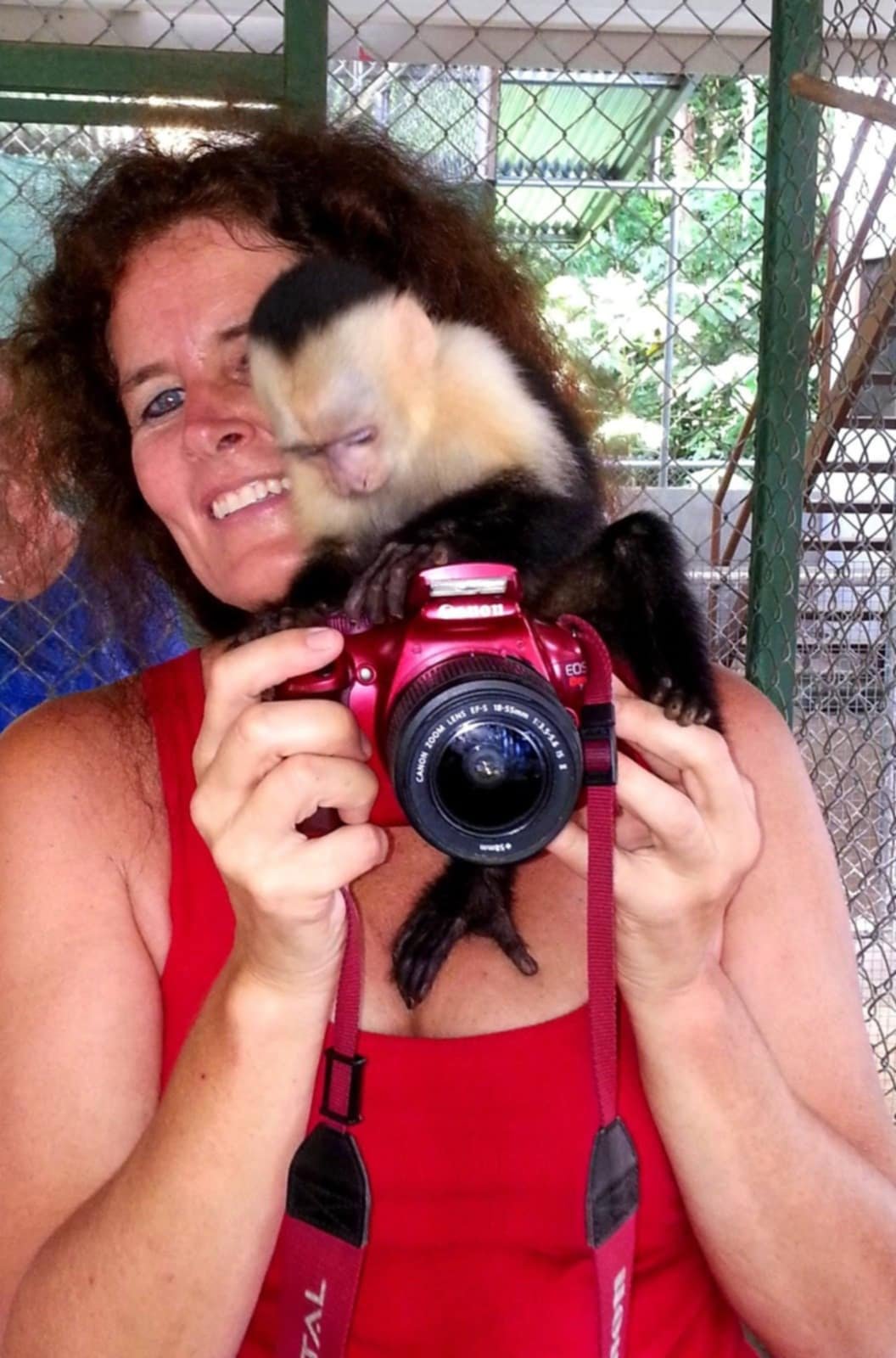
More often than not, Capuchins approach people with curious eyes, hoping for a tossed treat. Trouble usually stems from human behavior—feeding monkeys or inviting them into hotels for a quick photo. These interactions teach bad habits that monkeys pass down to their young, reinforcing a cycle of dependency and boldness.
WHAT’S IN A NAME?
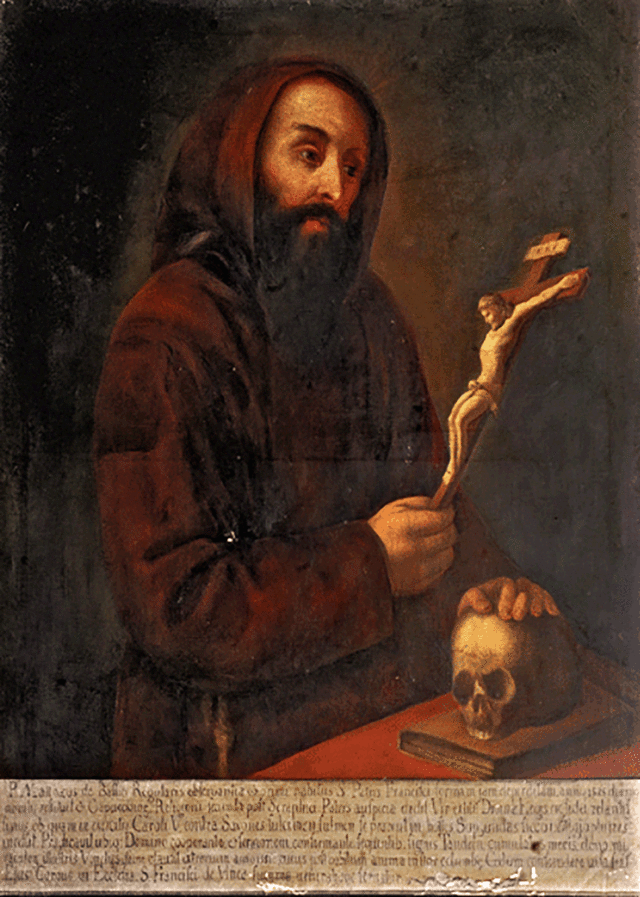
Like their Costa Rican compatriots Mantled Howler Monkeys , Capuchins trace their name to an ancient European item of clothing (or more precisely, the people who wear that clothing) – in this case it is the Order of Friars Minor Capuchin, who wear dark hooded robes. When worn by the monks, these robes resemble the dark-colored areas of the Capuchin Monkeys.
BEHAVIOUR
Group Encounters
White-Faced Capuchins form troops of 10 to 40 individuals. When two groups cross paths, males often grow aggressive and may fight to the death. Meanwhile, females grab their infants and flee. If the clash occurs deep in another group’s territory, the stronger or larger male troop often loses and retreats. On neutral ground, the group with more or stronger males usually wins the encounter.
During the dry season, tensions rise. Capuchins drink daily, so when water sources shrink, fierce squabbles erupt around the few remaining ponds and streams.
Dangers
Capuchin monkeys most often die at the hands of other monkeys—typically larger, stronger males. Since males switch troops about every four years, often with kin, roaming groups regularly clash with resident troops. To prepare for these threats, males form tight alliances within their troop. Though they may squabble over food or rank, they quickly band together when facing a shared enemy.
Alpha Males
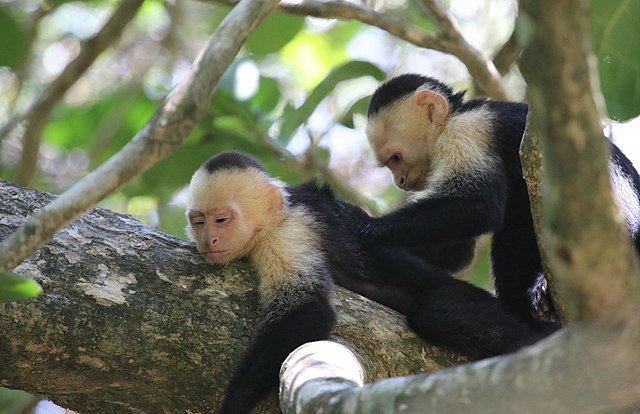
Female Capuchins typically remain with their kin throughout life, while males begin migrating between groups as early as two years old. Most males travel with relatives, but the Alpha Male often stays in the same troop—sometimes for up to 17 years. This stability fuels intense competition for dominance. With many related individuals in one group, Alpha Males usually avoid mating with their daughters, leaving reproduction to subordinate males. Still, the Alpha shares the troop with numerous sisters and half-sisters, maintaining strong familial ties.
DIET
Capuchin monkeys adapt well to habitat changes, thanks to their broad diet. They consume around 95 fruit species and show strong preferences for ripe, sweet varieties. To test ripeness, they sniff and squeeze each fruit, spitting out seeds and fibrous bits without hesitation. Beyond fruit, they also eat flowers, seeds, and tender leaves.
They certainly don’t stick to plants alone—Capuchins eagerly hunt insects like beetles, butterflies, larvae, ants, and wasps. They also prey on birds, eggs, frogs, lizards, crabs, mollusks, and small mammals. In Guanacaste, they actively pursue squirrels, magpies, baby coatis, and parrots.
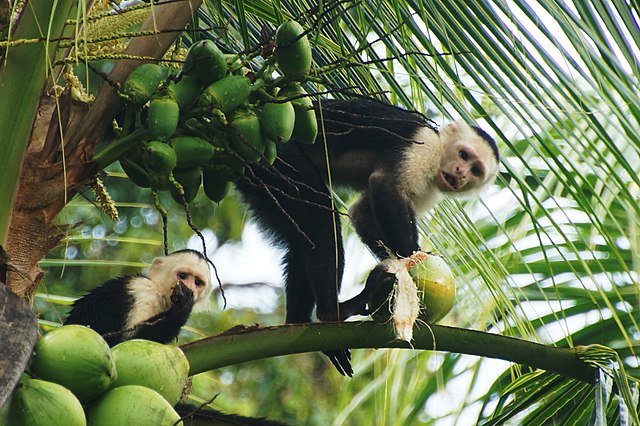
Capuchins enjoying a meal of plentiful coconuts. c/o rob Stoeltje, wikicommons.
PREDATORS
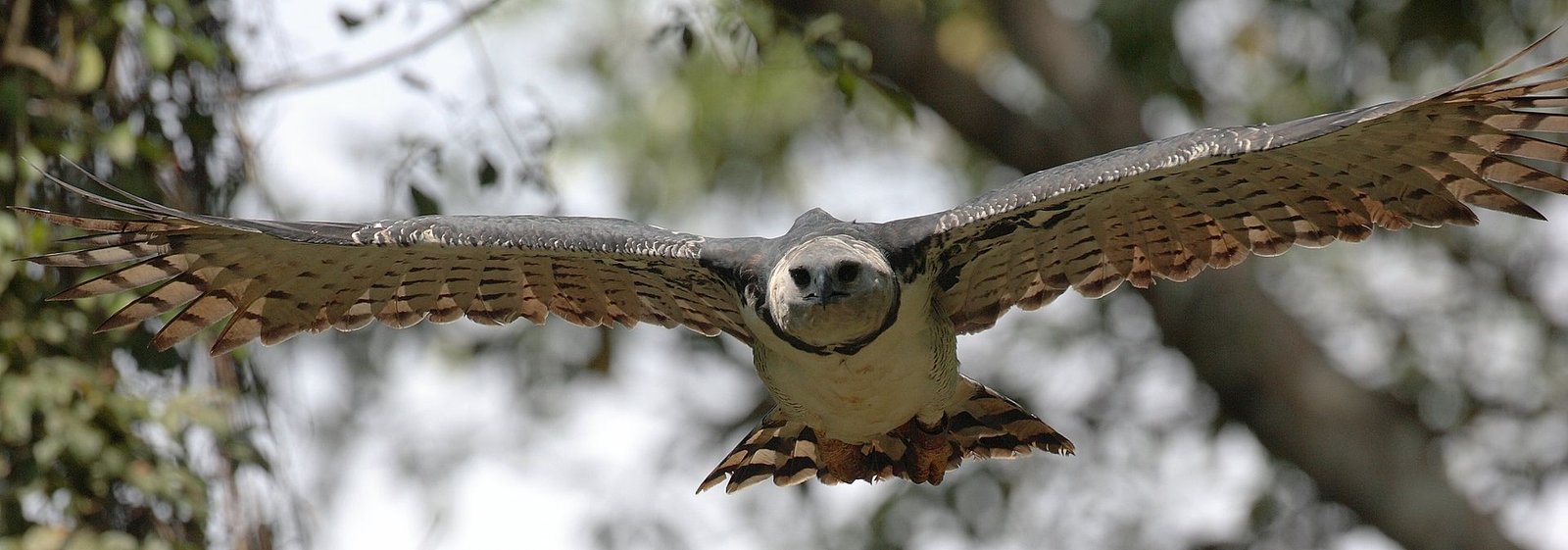
Capuchins face a familiar lineup of predators—jaguars, cougars, jaguarundis, coyotes, tayras, snakes, crocodiles, and raptors all target both juveniles and adults. Humans also hunt Capuchins for bush meat, and in certain regions, they pose the greatest threat to these intelligent primates.
RANGE & CONSERVATION STATUS
Panamanian White-Faced Capuchins (Cebus imitator) live in Costa Rica and range from Honduras to Panama. Their sister species, Colombian White-Faced Capuchins (Cebus capucinus), inhabit Panama, Colombia, and Ecuador. These monkeys face vulnerability, appearing frequently in some countries but remaining scarce in others. Their flexible diet allows them to thrive in modified habitats such as towns, gardens, and plantations, reducing reliance on dense forests. Surprisingly, Capuchins gain some advantage from human-altered landscapes, since forest destruction severely impacts one of their top predators—the Harpy Eagle.
Do you dream of living amongst the jungles, surrounded by amazing animals like our mischievous Capuchin Monkeys? RE/MAX WE SELL PARADISE lists hundreds of tropical properties – homes, land, farms, estates & businesses – all within a stone’s throw of the amazing rainforests, mountains and beaches that make Costa Ballena a world-famous destination. See our wonderful & tropical property listings here.
Cover image courtesy of Tomáš Malík, Pexels.


