
The American Crocodile
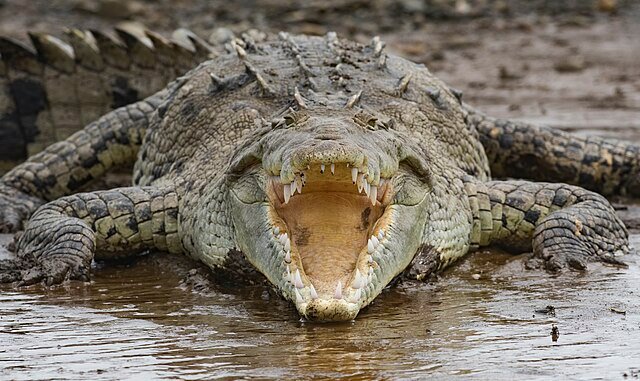
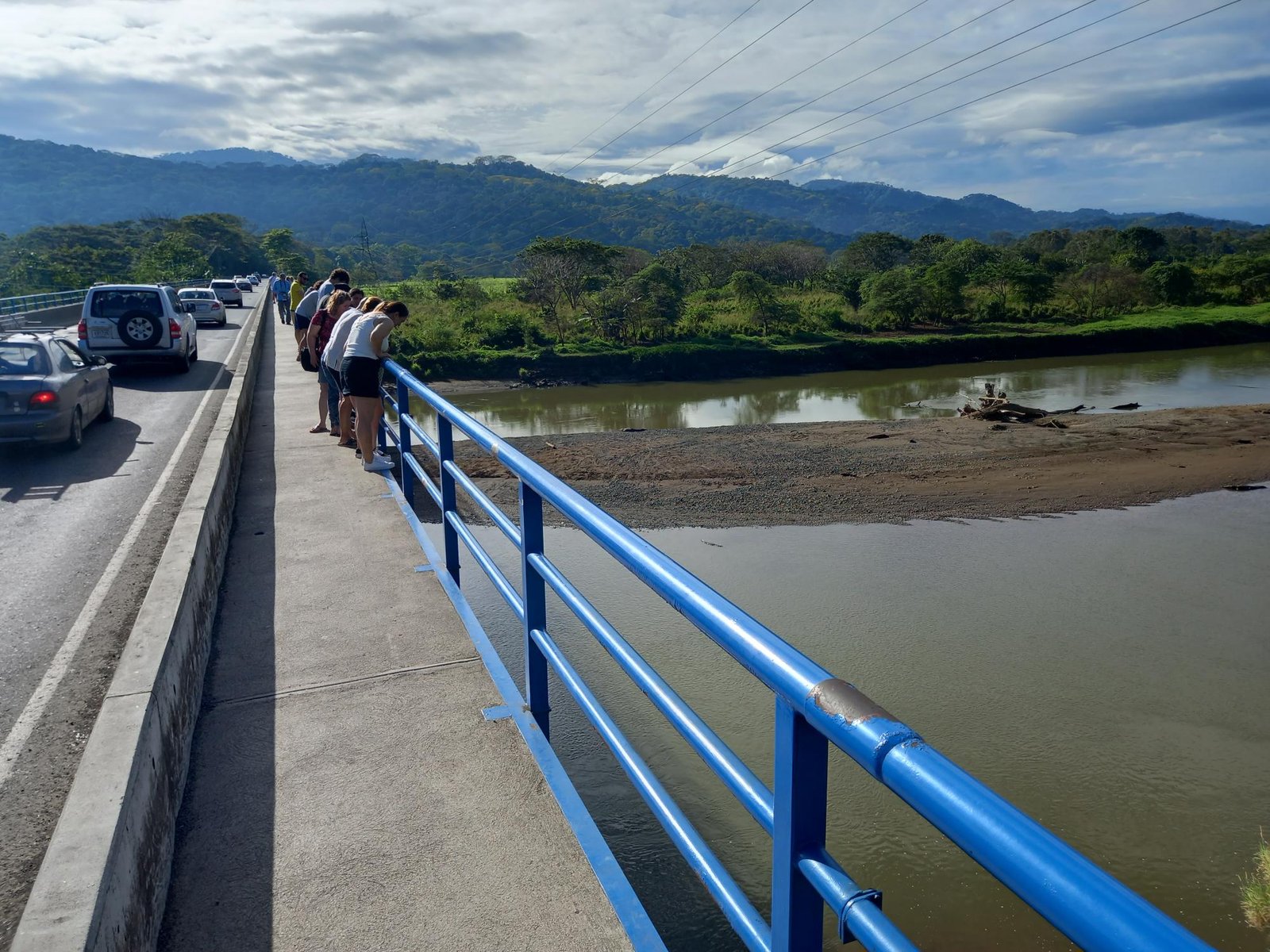
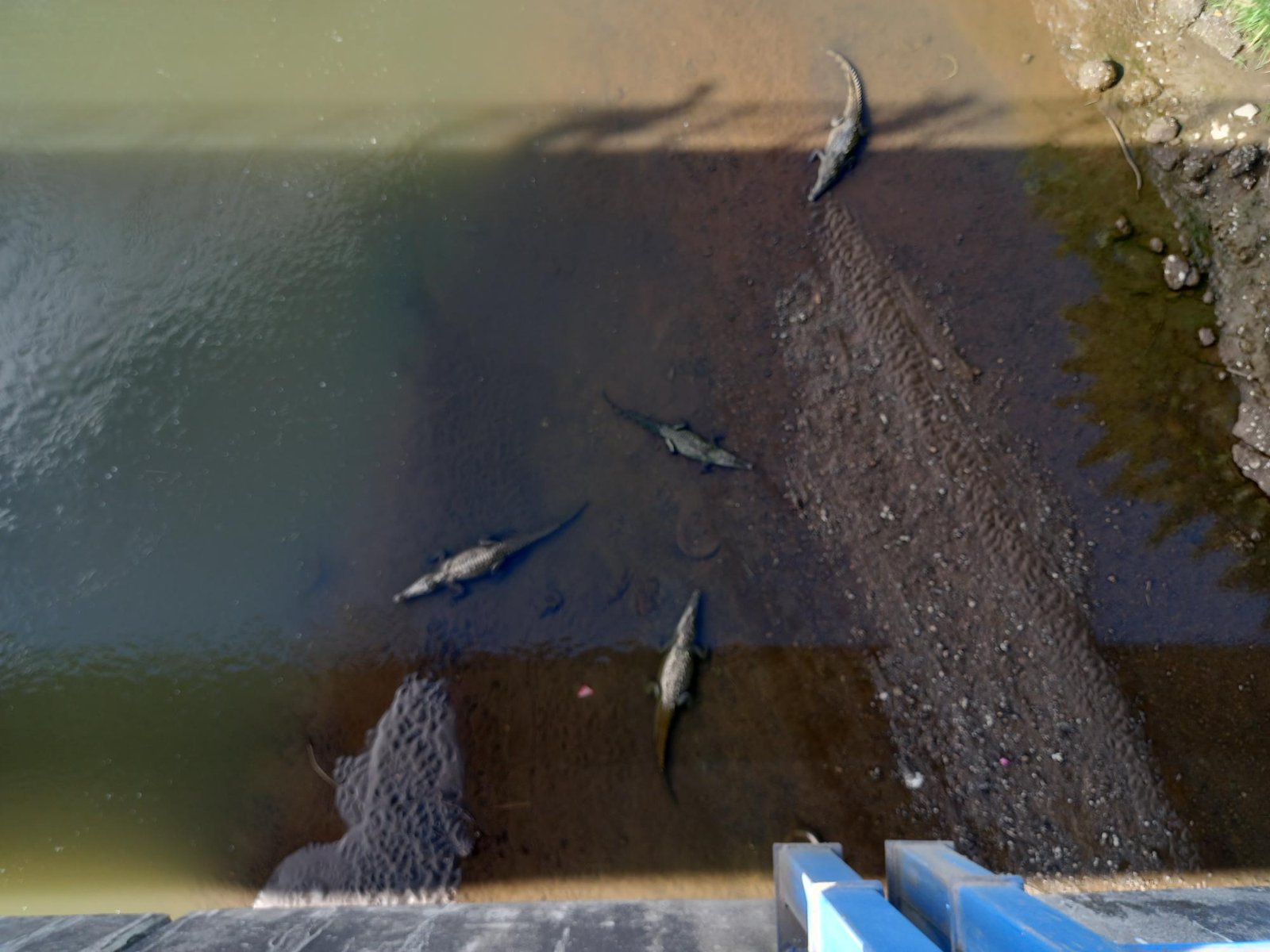
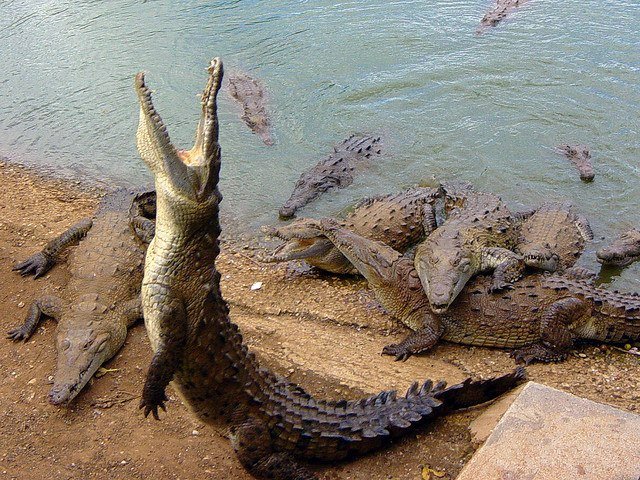
Many visitors who drive to Costa Ballena from San Jose are sure to pull over at the kitschy tourist attraction called the Crocodile Bridge – home to dozens of wild American Crocodiles that lurk under and around the highway overpass. This spectacle is a timely reminder that these creatures live all over Costa Rica – in fact they are common across a wide area ranging from Florida, across the Caribbean islands, Mexico, the whole of Central America and all the way down to the Amazon rainforest. While attacks on humans are rare, it is a good idea to become familiar with these animals and know how to minimize any chance of a nasty encounter with a creature that sports a bite force of 3000 pounds per square inch – one of the most powerful bites in the animal kingdom!

THE AMERIAN CROCODILE
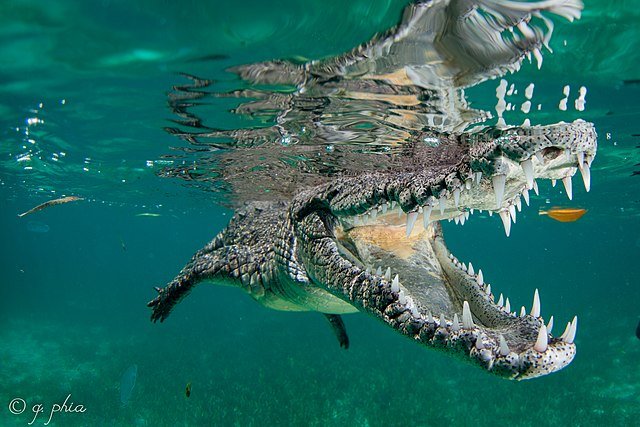
American Crocodiles are massive—among the largest crocodile species on Earth. Exceptionally old and well-fed males can grow up to 6 meters (20 feet) long and weigh over 1,000 kilos (2,200 lbs). Fortunately, most individuals measure a more modest 3 to 4 meters (10–14 feet) and weigh around 400 kg (900 lbs). Females usually stay smaller than males.
The crocodiles at Costa Rica’s famous Tárcoles River Bridge are especially impressive. Many reach lengths of 4.5 meters and tip the scales at 500 kg (1,000 lbs), making them some of the longest and heaviest American Crocodiles in the New World. Their size, visibility, and proximity to the highway have turned the bridge into a must-see wildlife spectacle.
THE CROCS OF COSTA BALLENA
There are a few local American Crocodile hangouts – the Térraba River, Térraba-Sierpe Wetlands, and Playa Tortuga should be considered crocodile infested at all times – in fact the Ojochal area, due to proximity to the above locations, is considered to be a major Costa Rican crocodile hot spot. Crocs have also been seen at Playa Ventanas, Playa Dominical, Playas Hermosa & Uvita, Barú River, and even the entrance to Cinco Ventanas. It is safe to say that, from time to time, every marine coastal area of Costa Ballena is visited by the crocs – especially local rivers, river deltas, lagoons, estuaries and mangroves – the prime croc habitats. Just think of it this way – if you are near an area where fresh and salt waters mix, considered this area to harbour crocodiles.

!!! CROCODILE SAFETY !!!
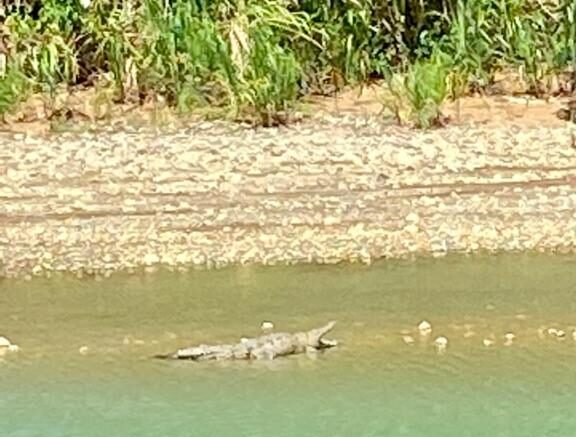
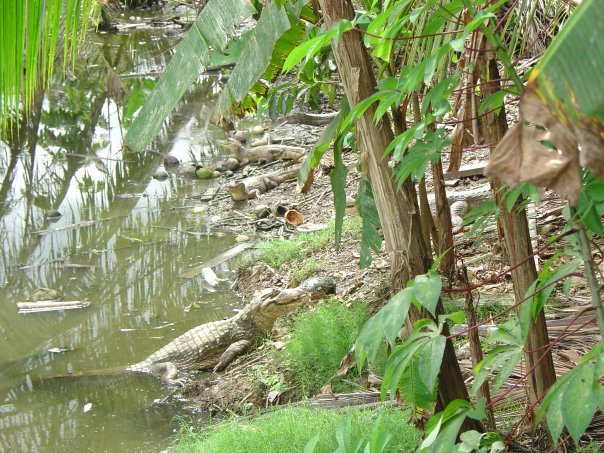
American Crocodiles tend to avoid humans. When approached, they usually retreat into nearby water rather than stand their ground. This behavior contrasts sharply with the Nile Crocodile of Africa and the Saltwater Crocodile of Southeast Asia and Australia—both species are known to actively target people. Still, encounters do happen. While American Crocodiles are generally calm around humans, they can become aggressive if startled, threatened, hungry, or if their nest or young are nearby. Poor visibility can also lead them to mistake people for prey. Respect and caution remain essential when sharing space with these powerful reptiles.
Make sure to avoid:
- Swimming in known crocodile-infested habitats. Those are likely to include rivers, swamps, lagoons, river deltas, estuaries and mangroves, but could also be ocean beaches or off-shore ocean islands. Pay attention to signs and local advice to identify such areas – but also use your judgement. If in doubt, stay out!
- Swimming in any likely crocodile habitats like rivers, swamps, lagoons, river deltas, estuaries and mangroves at night / around sunrise or sunset / if the water is murky.
- Camping or fishing near crocodile infested areas or likely crocodile habitats.
In addition:
- Exercise caution when entering any body of water after heavy rains because the crocs can become displaced and the water may be murky.
- NEVER approach any basking crocodile, or one that is in the water. The crocs are especially fast on land – don’t think you could outrun one! They can reach 18 km/h or 11 mph on land and an astonishing 32 km/h or 20 mph in the water – thanks to the movements of their powerful tails! They are also capable of explosive movements both on land and in the water.
- Pay attention to crocodile warning signs and heed any local advice.

American Crocodiles thrive in brackish water and tolerate salt water with ease. They sometimes travel far from rivers or deltas, even venturing into open ocean or remote beaches. Their tongues contain specialized salt-excreting glands that help them survive in marine environments. These adaptations allow them to move silently and remain nearly invisible—whether gliding through deep ocean waters or lurking in shallow, murky rivers.
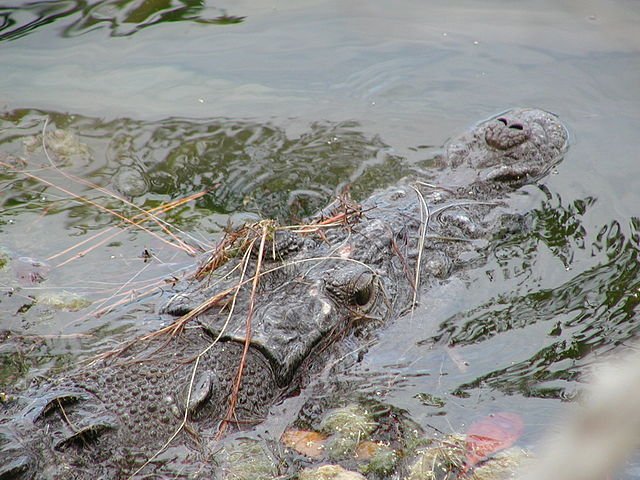
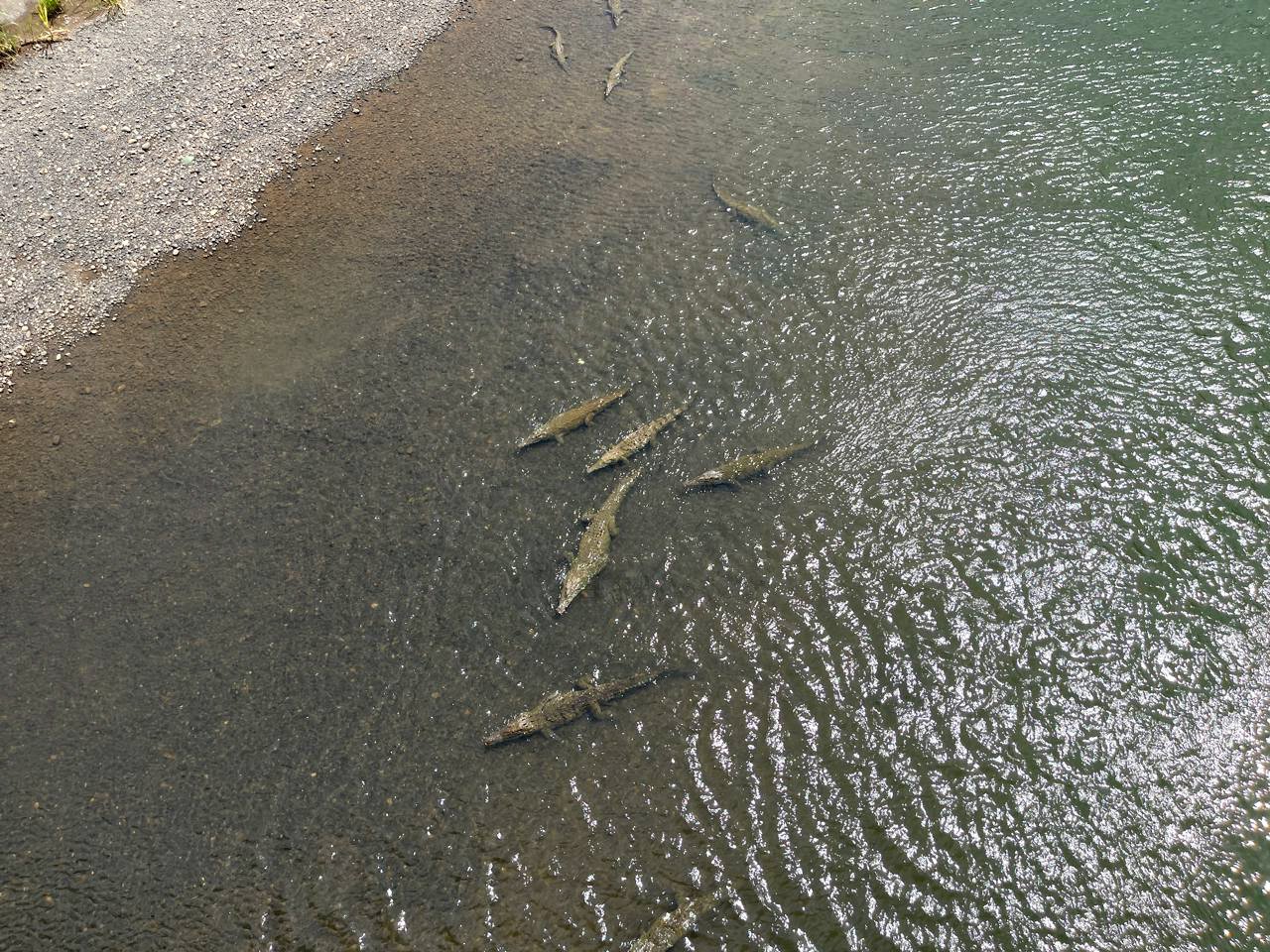
THE TÁRCOLES CROCODILES – THEY ARE THE BIGGEST!
The Tárcoles River, near Jaco, holds Costa Rica’s most famous population of American Crocodiles. Dozens of them gather in the Tárcoles River, either lurking just below the surface or basking in full view beneath the highway bridge. To protect visitors from fast-moving traffic, a new pedestrian crossing now separates tourists from the road. On the northern end of the bridge, shops, cafés, and restaurants have popped up, transforming the area into a spontaneous wildlife attraction. The crocodiles here are truly impressive—many reach lengths of 4.5 meters or more, ranking among the largest in the New World.

FOR HEAVEN’S SAKE – TAKE CARE OF YOUR DOGS
We’ve all seen the heartbreaking videos of dogs taken by American Crocodiles along Costa Rica’s beaches. Families scream in horror as the attacks unfold in seconds. Playa Tortuga, near the Térraba River Delta, stands out as a repeat location for these incidents. Bringing a free-running dog to a known crocodile beach shows a lack of responsibility. Dogs no longer recognize danger the way wild animals once did—we bred that instinct out over thousands of years. Many will run straight toward crocodiles, barking. The crocs respond instantly, grab the dog, and vanish into the water. It’s a tragic and avoidable mistake.

THE FAMOUS POCHO!
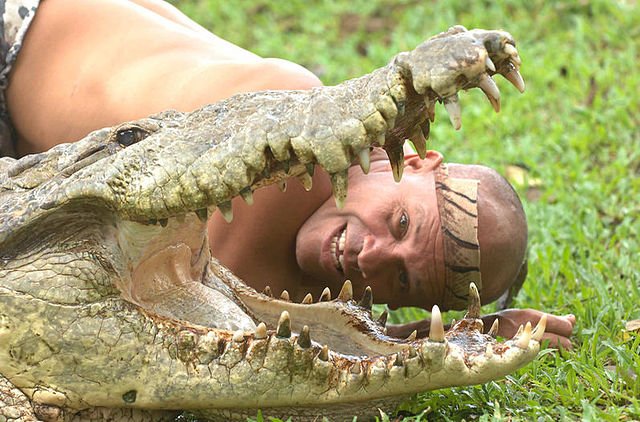
Pocho’s story is one of the most extraordinary human-animal bonds ever recorded. In 1990, Gilberto “Chito” Shedden, a fisherman from Siquirres, Costa Rica, discovered a 70-kg American Crocodile near death on the banks of the Reventazón River. A local farmer had shot Pocho in the head after the crocodile began feeding on his cattle. Chito, moved by compassion, loaded the injured reptile into his boat and took him home. For six months, he fed Pocho 30 kg of chicken and fish weekly, slept beside him, and even mimicked chewing to encourage him to eat.
Once Pocho regained strength, Chito released him into a nearby river. But the crocodile refused to leave. He returned to Chito’s home and made the river outside his house his permanent residence. Their bond deepened, and Chito began swimming and training Pocho. The pair became the stars of weekly performances at Las Tilapias Tourist Center, drawing visitors from around the world.
Their friendship was documented in Dragon’s Feast, filmed shortly before Pocho’s death in 2011.
DIET
Not a Fancy Eater!
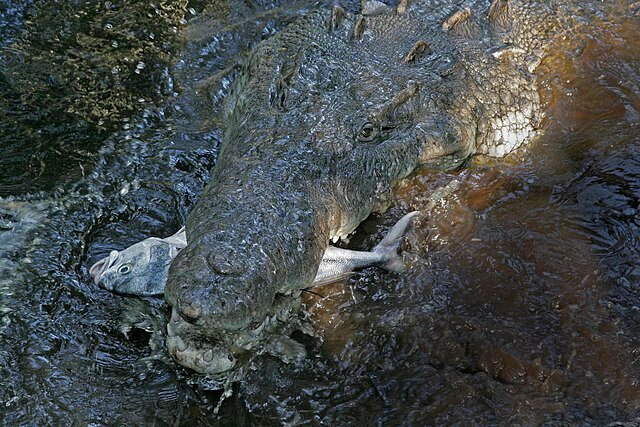
American Crocodiles rank among the top predators in Costa Rica. They attack nearly any animal that crosses their path—on land, in rivers and swamps, or even in open ocean waters. Their diet includes birds, mammals, turtles, fish, lizards, amphibians, smaller crocodiles, and occasionally carrion or fruit. Over time, some crocodiles adapt to feeding on domestic animals like dogs, pigs, goats, ducks, and chickens. In rare cases, they even hunt full-grown cows. These behaviors often lead to conflict with local farmers, especially in areas where human settlements overlap with crocodile habitats.
Sea Turtle Snacks
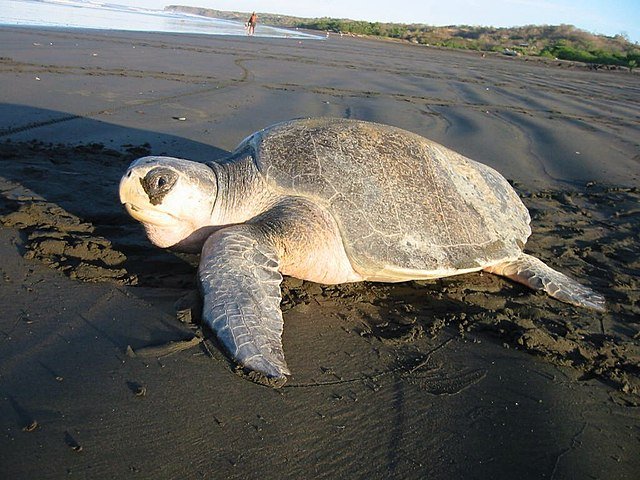
In Costa Rica, American Crocodiles now ambush sea turtles as they come ashore to lay eggs. This behavior surprised researchers who believed only Sharks and Orcas could break the tough shells of Olive Ridley turtles. The discovery challenged long-held ideas about predator strength and added a new layer to coastal wildlife dynamics.
Energy Conservation & Stealth
American Crocodiles are masters of energy conservation. They can go for months without eating by drastically slowing their metabolism, especially during cooler seasons or periods of low prey availability. This adaptation allows them to survive in environments where food is scarce or unpredictable.
When they do hunt, stealth is their greatest weapon. These reptiles can remain submerged for over an hour, using their elevated eyes and nostrils to monitor surroundings while staying nearly invisible beneath the water’s surface. Once prey comes close, they strike with explosive speed and precision—an ambush perfected over millions of years
BREEDING
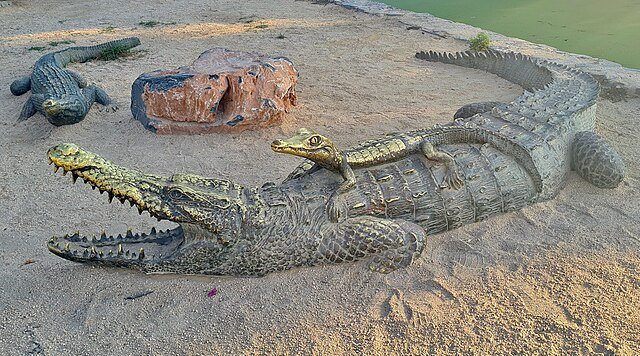
The female crocodile constructs a nest using mud, sand, and vegetation, creating a natural incubator for her clutch of 30 to 60 eggs. This earthy structure helps regulate temperature, which plays a critical role in determining the sex of the hatchlings—cooler conditions typically yield females, while warmer temperatures favor males. She often stands guard over the nest, fiercely protective. Once the eggs hatch, she gently carries her young in her mouth from the nest to the water, ensuring their first journey is a safe one.
INTERESTING FACTS
- Crocodiles are not able to regulate their body temperature – so they ‘bask’ in the sun to bring their body temperature up, and head into the waters or shade to cool off.
- In the wild, American Crocodiles can live to be 70-100 years old.
- ‘Crocodile Tears’ refers to the habit of crocs ‘crying’ while eating – this has nothing to do with feeling sorry for the poor dinner animal; it is rather a physiological response related to the eating process.
- Crocodiles are ancient, predating the dinosaurs. They have not changed much in 200 million years.
- American Crocodiles have around 80 teeth – and each tooth can be replaced up to 50x during the lifetime of the crocodile.
- The muscles used to open the crocs’ mouths are super weak – a human can easily hold shut the American Crocodile’s mouth. But the opposite is true when it comes to the crocs closing their mouths!
- Grunts, hisses and deep growls are how the crocs communicate with each other – while younger crocs and hatchlings make chirping sounds to stay in touch with their mother. The crocs also use body language like snapping their head against the water.
Do you dream of living in the midst of breathtaking tropical scenery and amongst amazing animals like the American Crocodile? They are a sight to behold, especially when seen free and wild along our numerous river estuaries – an ancient reptile unchanged for 200 million years. The crocs are a part of our tropical landscape! At RE/MAX WE SELL PARADISE, we list hundreds of tropical properties – homes, land, farms, estates & businesses – all within a stone’s throw of the amazing rainforests, mountains, rivers and beaches that make Costa Ballena a world-famous destination. See our property listings here.
Cover image c/0 Randall L. Ortega, wikicommons.


