
Our Giant Green Anole
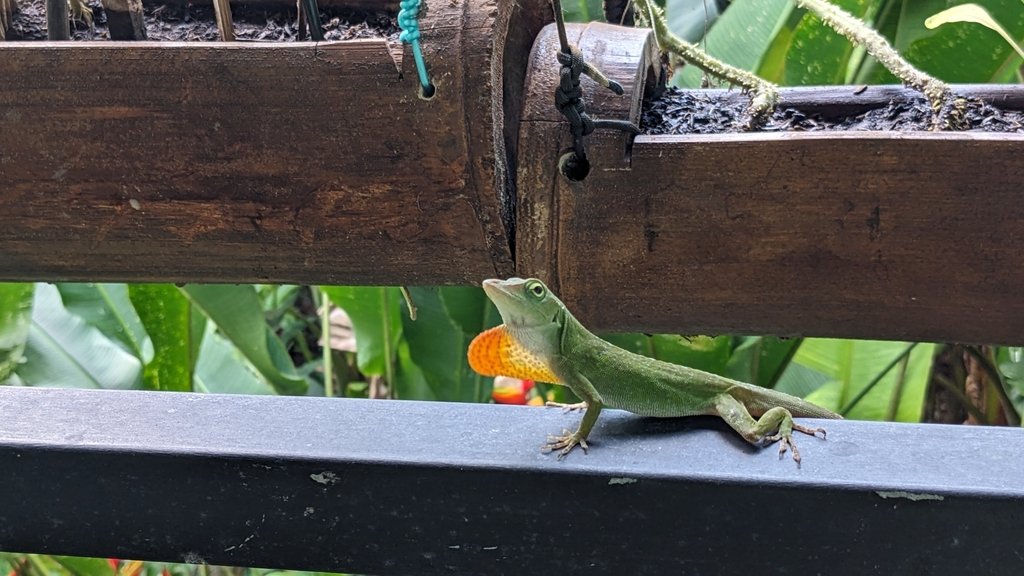
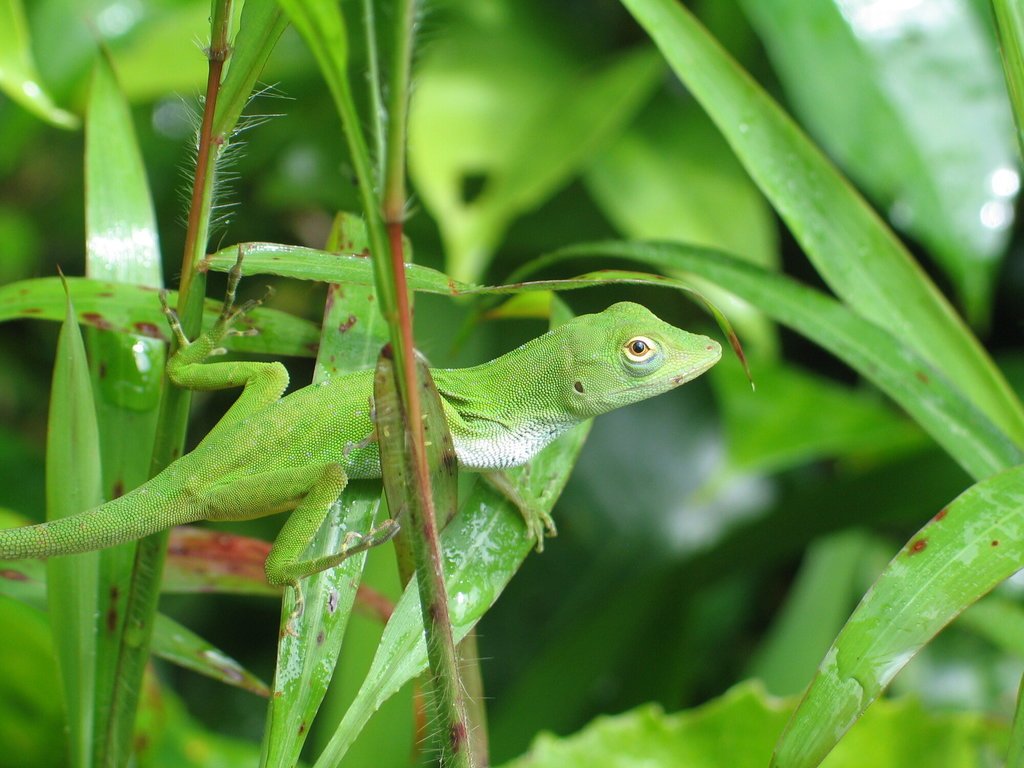
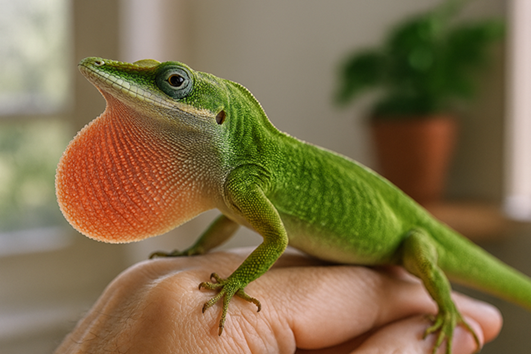
The Giant Green Anole (Anolis biporcatus) is a large, emerald-green lizard native to humid forests in Central America. It’s often mistaken for its North American cousin, Anolis carolinensis, but it’s bigger, bolder, and more elusive. It’s not a true chameleon, but it can shift between bright green and brown depending on mood, temperature, and stress levels. And have you ever been mesmerized by the animal showing off its bright dewflap??? I have often watched this lizard as it meandered along my towering garden cacti, exhibiting flashes of vivid pinks & reds. It’s a sight to behold, a very tropical and ‘Jurassic Park’ vibe!
👅 The Dewlap: A Flashy Flap with Purpose
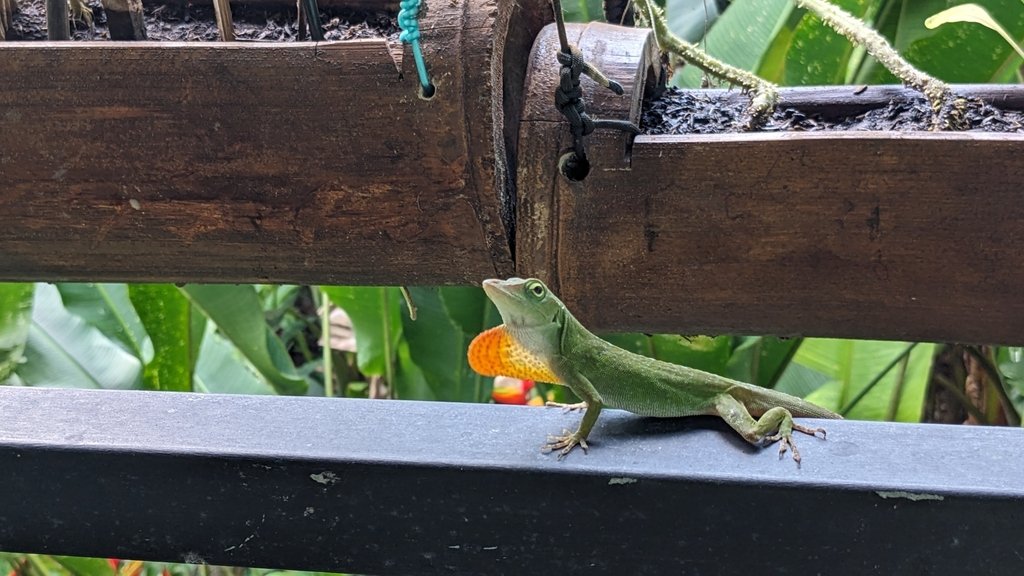
The Giant Green Anole’s dewlap is a vibrant pinkish-red, extendable throat fan used for communication. It serves as a signal for attracting partners, territoriality, deterring predators and communicating condition. The flap’s vivid pinkish red color and sudden movement grabs attention. Combined with head-bobs and push-ups, the dewlap becomes a powerful visual tool in the anole’s social language.
From my experience, these animals are invisible when wearing a matching camouflage – but they catch the eye as soon as the dewflap rolls out. Its movement and brilliance are instantly noticeable. And it is thought that the animals can see UV light, and with the dewflap absolutely lighting up under UV, this makes it even more noticeable to the species.
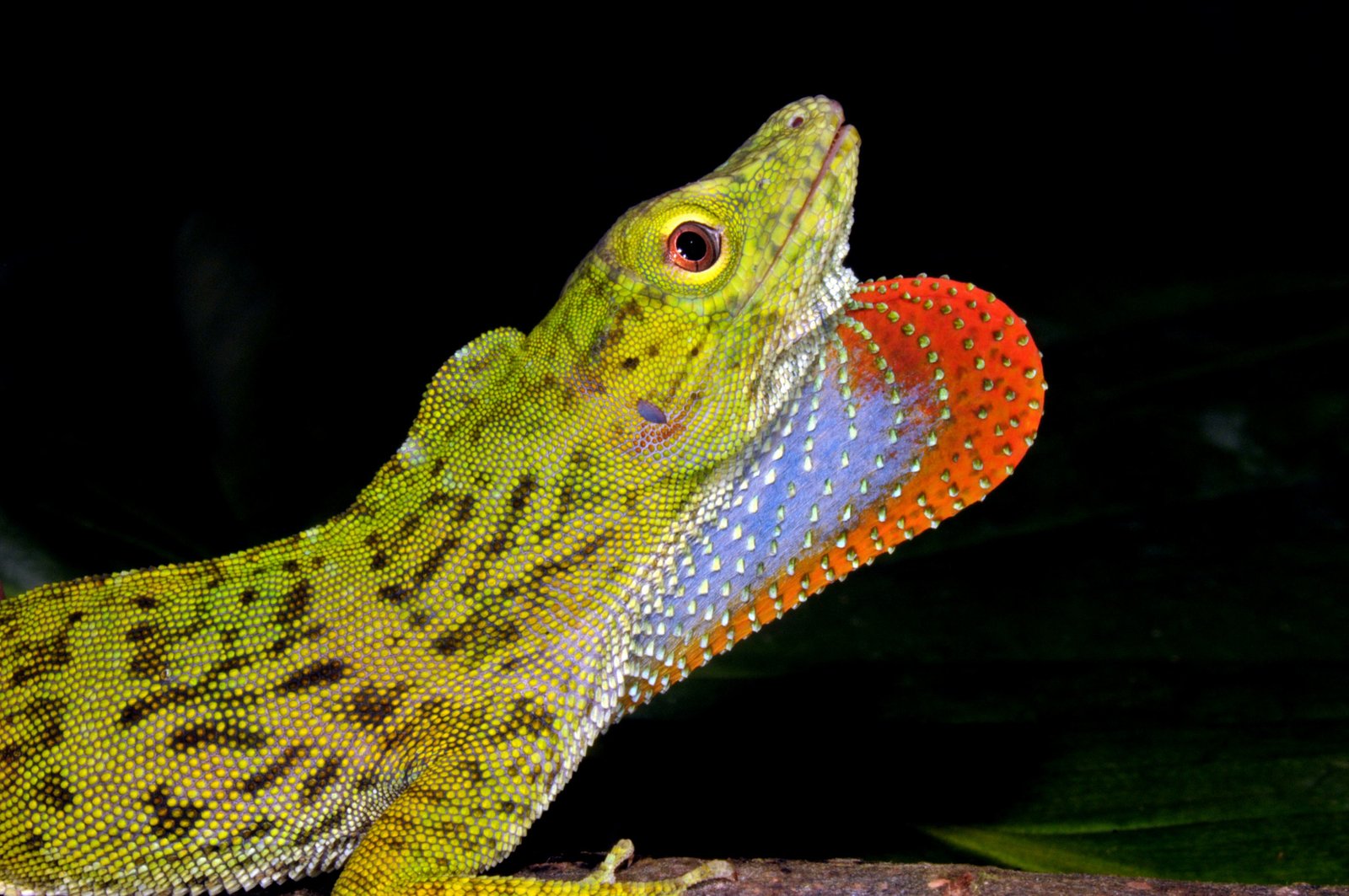
When several anole species share territory, the species almost always differ in their dewlap, indicating that it plays a role in species recognition.
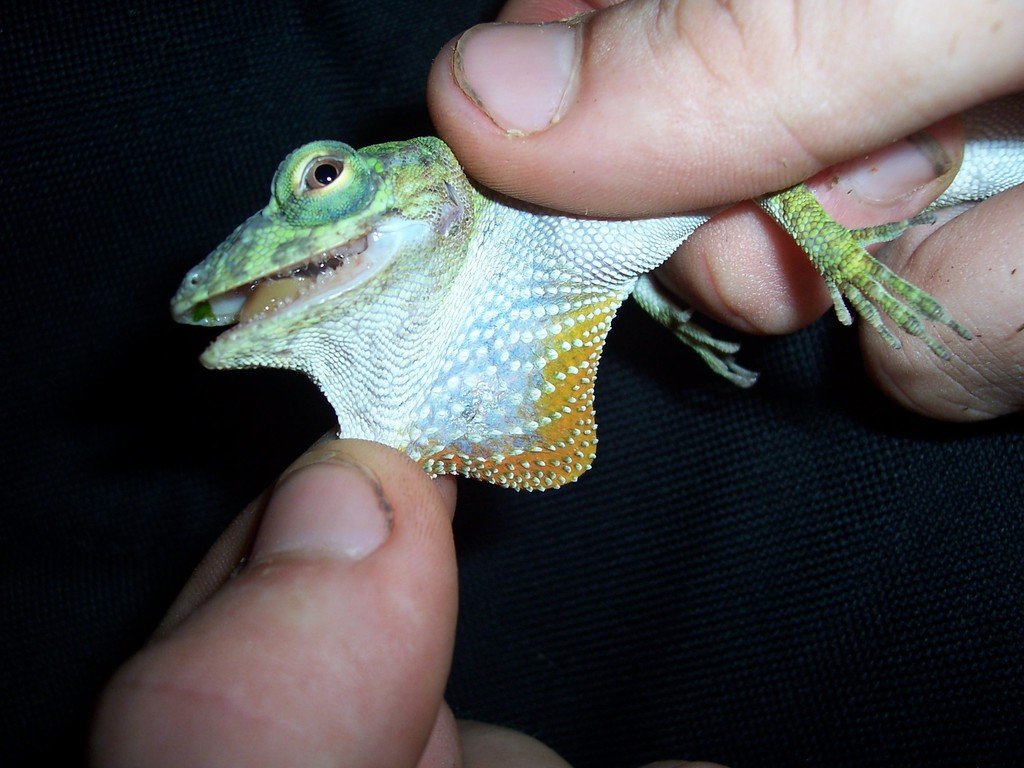
The male’s dewflap is about 3x larger than a female’s, and it is much brighter and vivid. In fact, the females may not even wear a recognizable dewflap. This can aid in recognizing the sex of the animal.
🎨 Color-Changing Secrets of the Green Anole
The Anole’s ability to shift between bright green and earthy brown is more than camouflage—it’s a window into its mood and health. This color change is controlled by chromatophores, specialized skin cells layered with pigments. When the anole is relaxed, warm, or dominant, it often glows a vivid green. In contrast, stress, cold, or submission can trigger a shift to brown.
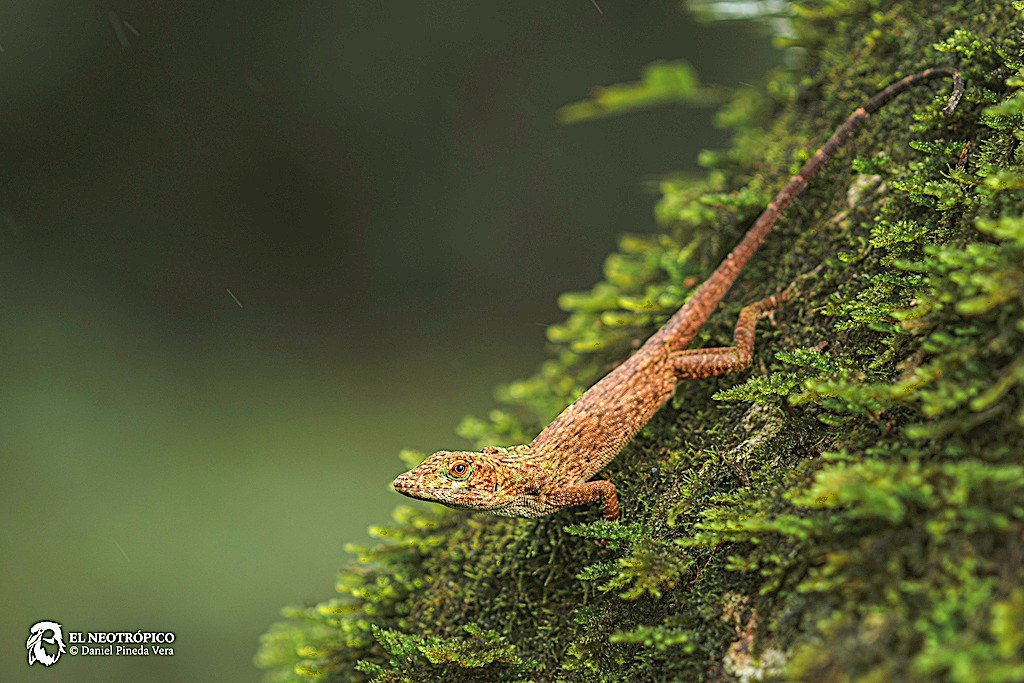
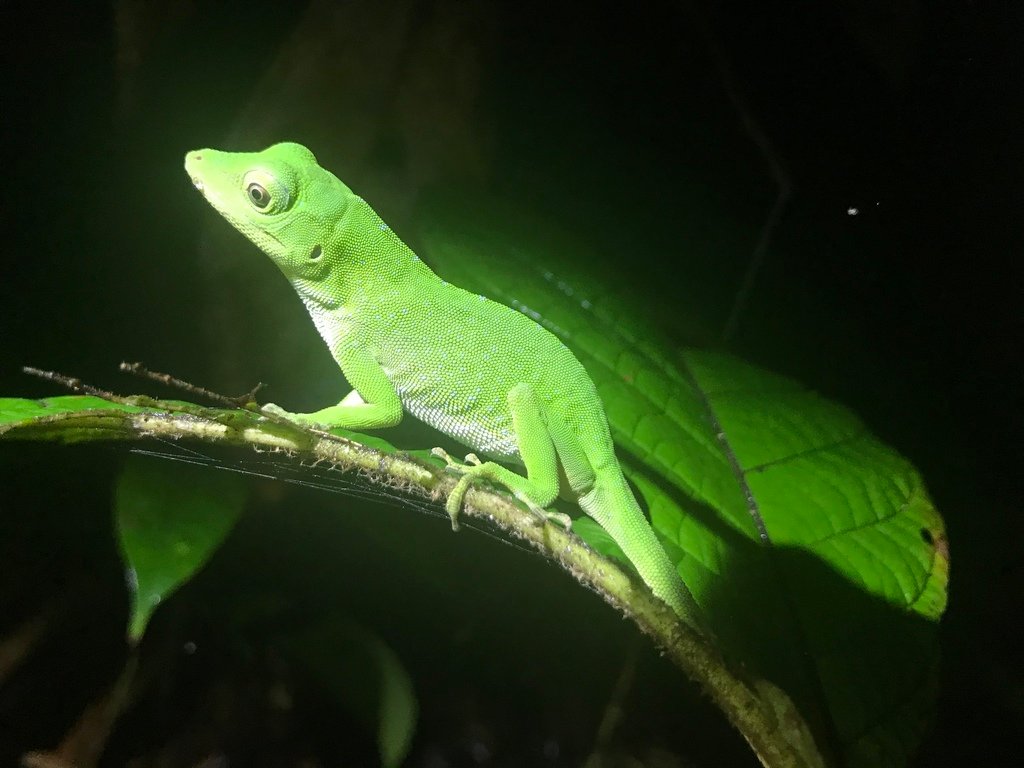
Unlike true chameleons, Giant Green Anoles don’t change into blues, reds, or yellows. Their palette is limited, but meaningful. A brown lizard might be cooling down, resting, or feeling threatened. A green one is likely alert, comfortable, or ready to court. This subtle signaling helps them navigate social hierarchies and environmental shifts without making a sound. And of course, the use of color for camouflage is a primary function.
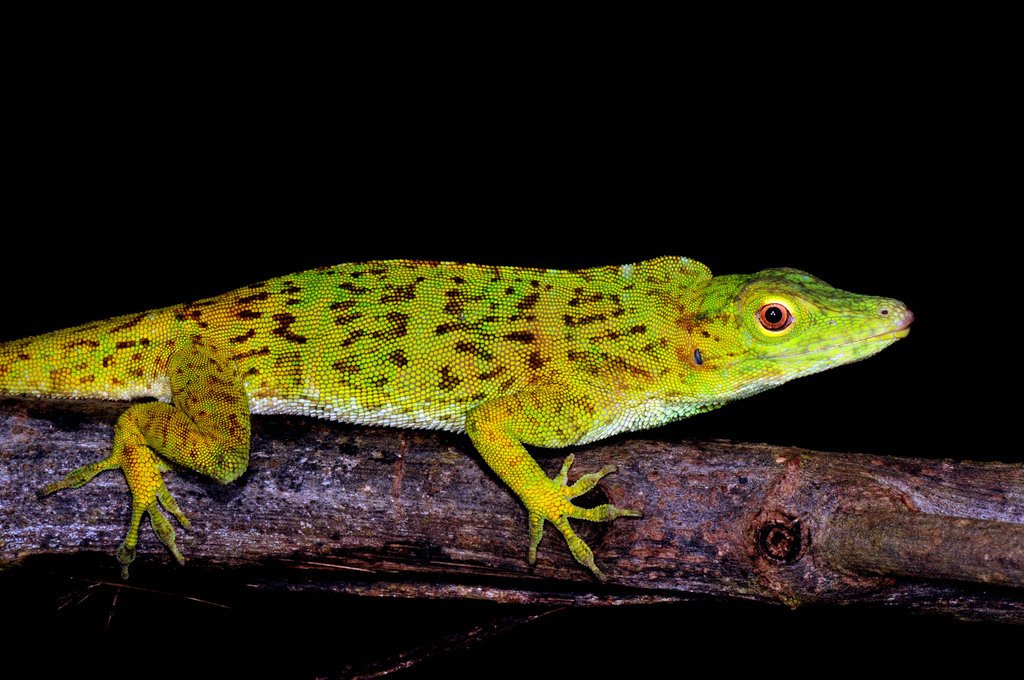
Color change also plays a role in thermoregulation. Darker shades absorb more heat, helping the anole warm up faster in cooler conditions. It’s a clever adaptation for a cold-blooded creature living in variable light and temperature zones.
🐜 What Do They Eat?
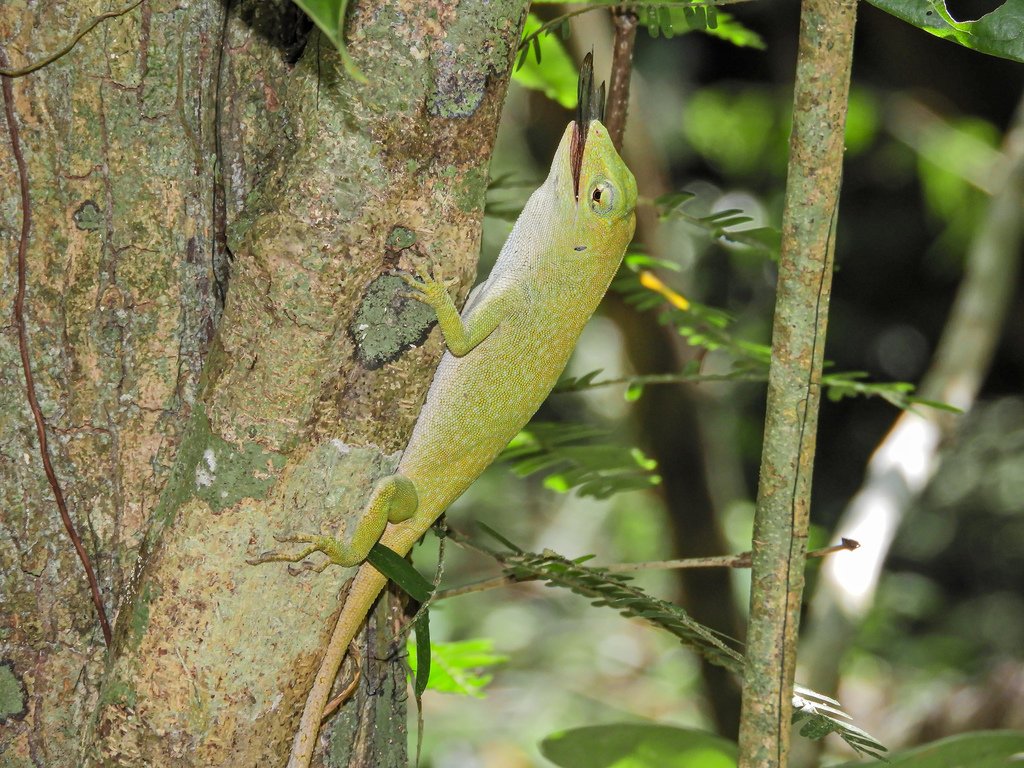
In the wild, giant green anoles are agile daytime hunters that feed mainly on insects like crickets, beetles, moths, and ants, as well as spiders and other small invertebrates. They use a sit-and-wait strategy, perching on branches or trunks to ambush prey. Though primarily carnivorous, they may occasionally consume nectar or soft fruits.
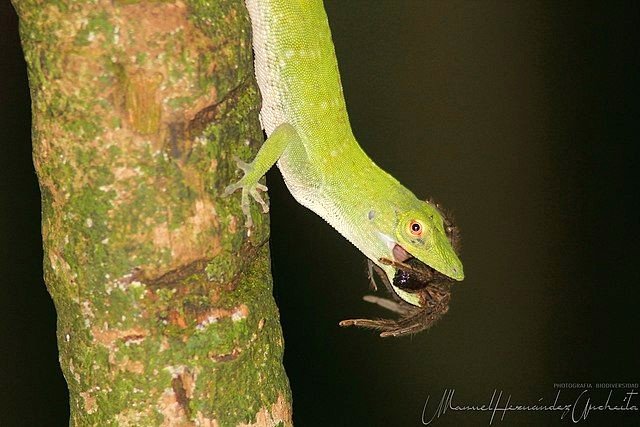
Their foraging spans from low shrubs to high canopy, helping regulate insect populations while serving as prey for birds and snakes.
🧠 Behavior and Habitat Use
Anolis biporcatus is arboreal and solitary. Giant Green Anole lives in brushy clearings, forest edges, and suburban gardens. They prefer warm, humid environments with plenty of foliage and sunlight. Literature states that it rarely descends to the forest floor. Males defend territories high in the canopy. Females stay more hidden and avoid confrontation. However, these critters are often seen hanging around low shrubs of Ben’s property. So they make great use of altered habitats which attract lots of tasty treats. The lights, foods scraps, plentiful water and diverse garden habitats are a haven for wildlife of all sorts and these lizards take full advantage, it seems!
🌿 Range & Conservation
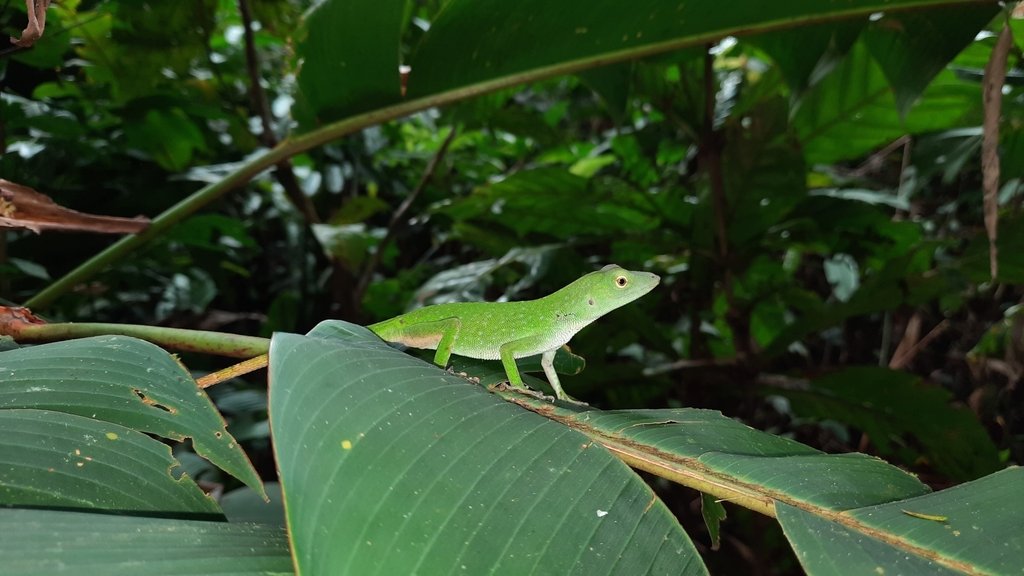
Anolis biporcatus is found from southern Mexico through Central America to northern South America, including Colombia and Venezuela. It currently is not threatened and it actually does well in disturbed and even urban habitats.
🏡 Can You Keep One as a Pet?
Yes, Giant Green Anole makes a low-maintenance pet. They need a warm tank with UV lighting, climbing branches, and misted foliage. A 10-gallon tank suits one or two anoles. Avoid housing males together—they fight over territory.
📏 Size and Lifespan
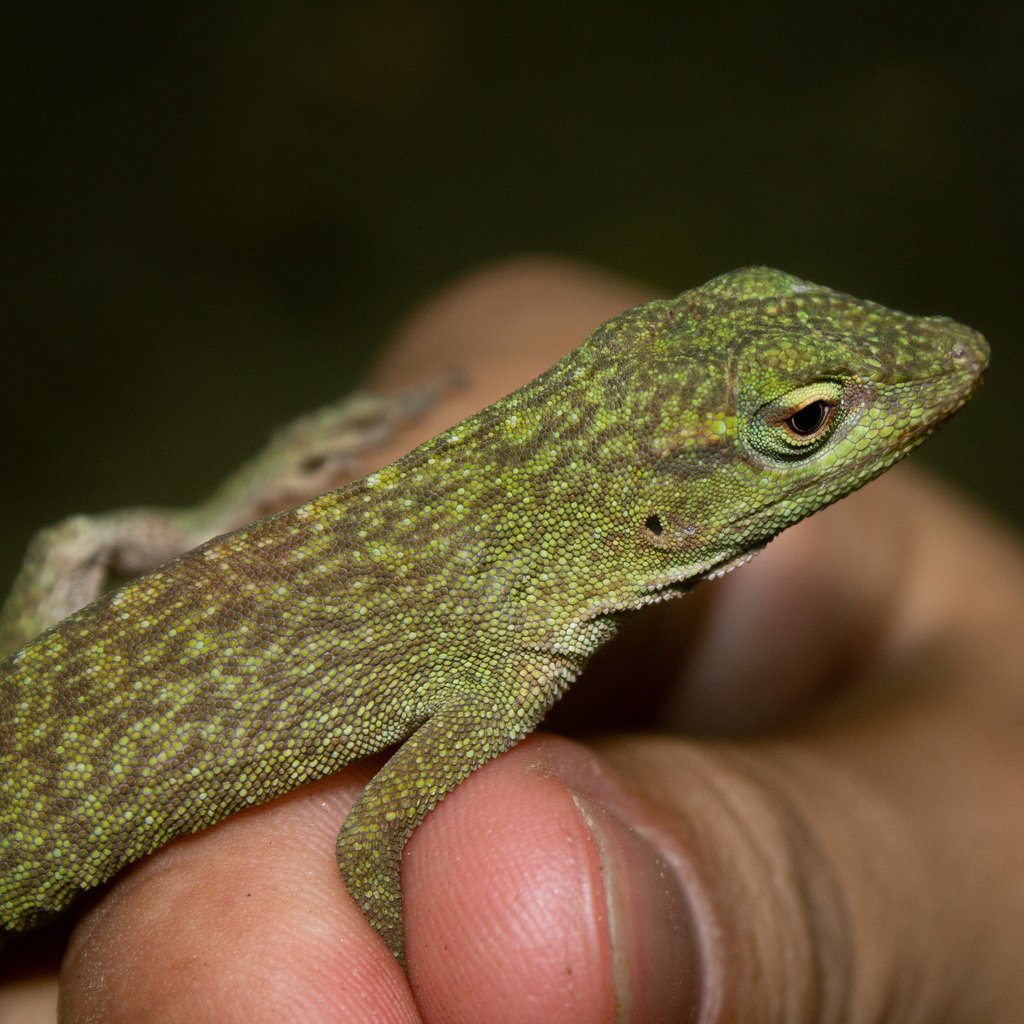
This species is one of the largest anoles in Central America, reaching up to 8 inches in total length. Its body is slender, with long limbs and a tapered tail built for climbing. Males have a snout–vent length of about 7.0–10 cm (2.8–4 in) and the females grow just slightly larger. In general, there is little sexual dimorphism in this species. The tail is roughly double the length of the snout-to-vent.
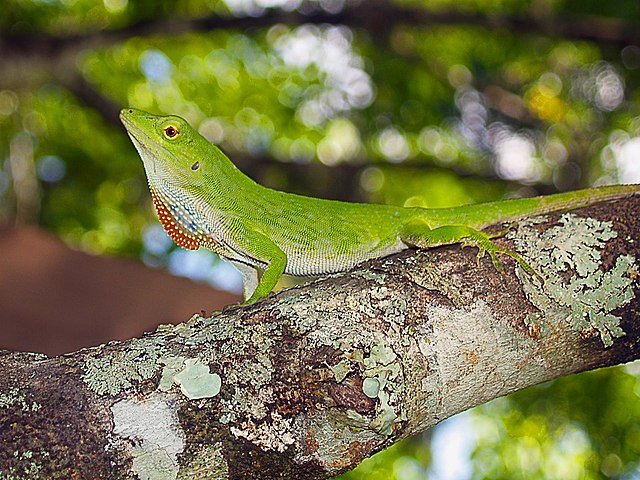
The lifespan of Anolis biporcatus is estimated to be around 4 to 8 years in the wild, depending on environmental conditions and predation. In captivity, with proper care, individuals may live slightly longer—up to 10 years—though this is less commonly documented due to the species’ relative rarity in the pet trade.
Do you dream of living in the midst of breathtaking tropical scenery and amongst amazing animals like our stunning & ancient Giant Green Anole? At RE/MAX WE SELL PARADISE, we list hundreds of tropical properties – homes, land, farms, estates & businesses – all within a stone’s throw of the amazing rainforests, mountains, beaches and resident exotic animals that make Costa Ballena a world-famous destination. Start your journey to Paradise by browsing our property listings here.
Cover image (c) Tom Kennedy, inaturalist


