
Hummingbirds of Costa Rica
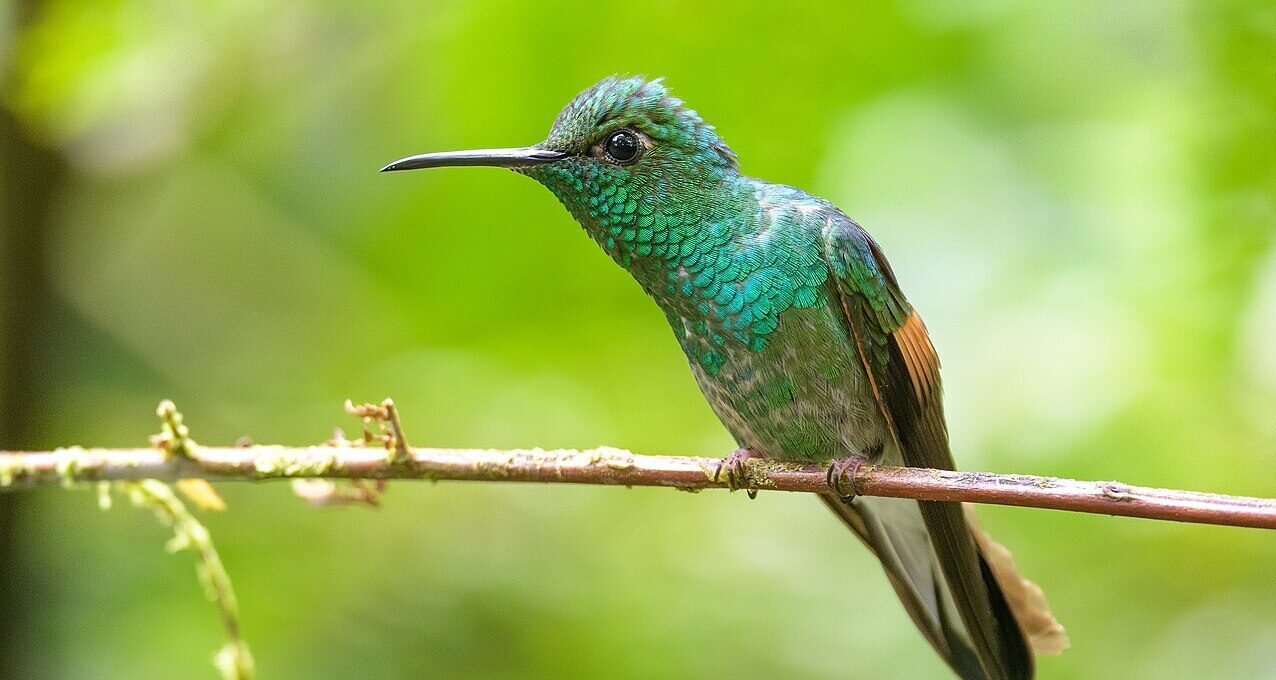
Costa Rica is one of the world’s most extraordinary hummingbird sanctuaries, home to over 50 species across cloud forests, towering volcanic slopes, mangroves, and tropical lowlands. Nowhere else packs so much color, speed, and ecological brilliance into such a small country. Other than being beautiful and delightful to look at, hummingbirds are essential pollinators, climate indicators, and icons of Costa Rica’s biodiversity.
🌺 A Biodiversity Hotspot Built for Hummingbirds
Costa Rica’s position between North and South America creates a natural biological bridge, allowing species from both continents to mix. Add in 12 distinct microclimates, dramatic elevation changes, and year‑round flowering plants, and you get the perfect evolutionary playground for hummingbirds. From the icy páramo at 3,000 m to the humid Caribbean lowlands, each region supports its own specialized species.
💥 The Explosive Hummingbird Evolution Saga
Hummingbirds evolved from swift‑like ancestors around 50 million years ago, first appearing in Eurasia before their lineage migrated to South America, where the rise of the Andes triggered a massive evolutionary explosion; isolated valleys, new elevations, and rapidly diversifying flowers pushed them into extreme specialization, producing the hovering flight, high‑energy metabolism, and bill‑to‑flower co‑evolution that define them today, ultimately giving rise to more than 340 species spread across the Americas.
Let’s look at some of the over 50 Hummingbird speccies present in Costa Rica. The variety of colors and habitats is truly amazing.
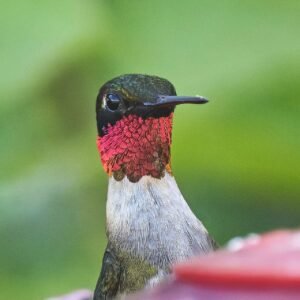
-🐦 Rufous‑tailed Hummingbirds
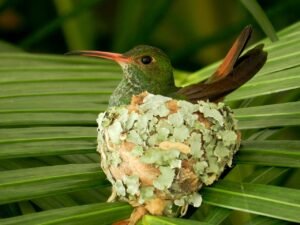
The country’s most common species, seen from lowlands to gardens. Its coppery tail and emerald body make it instantly recognizable. Territorial and bold, it often dominates feeders and urban blooms. This species is a key pollinator for heliconias and hibiscus.
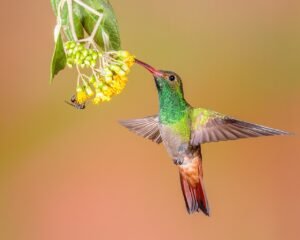
-🐦 Violet Sabrewings
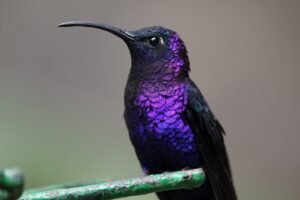
Costa Rica’s largest hummingbird, found in cloud forests of Monteverde and Arenal. Males shimmer violet‑blue with white tail tips, while females are subtler gray‑green. Their slow, powerful wingbeats and deep buzzing flight sound distinguish them from smaller species.
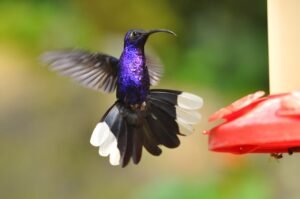
-🐦 Green‑Crowned Brilliants
Prefer humid mid‑elevation forests. Its metallic green plumage and long straight bill suit tubular flowers. Often seen hovering near bromeliads, it’s a favorite among photographers for its calm feeding behavior.
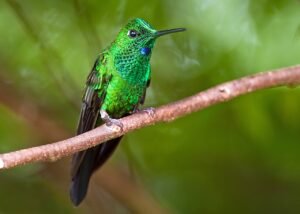
-🐦 Purple‑Throated Mountain Gems
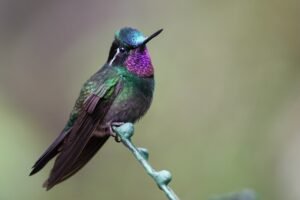
A highland specie of Central and Southern Costa Rica, males sport a vivid purple throat and white chest band. Females are bronze‑green with cinnamon underparts. They frequent shaded forest edges and coffee plantations, bridging wild and cultivated ecosystems.
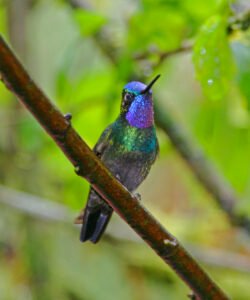
-🐦 Coppery‑Headed Emeralds
Found only in Costa Rica’s central highlands, this tiny bird glows with copper and emerald hues. It’s a conservation symbol, thriving in protected reserves like Bosque de Paz. Its limited range makes habitat preservation crucial.
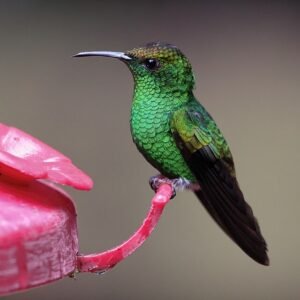
-🐦 Mangrove Hummingbirds
Restricted to Pacific mangroves, especially around Puntarenas and Nicoya. It feeds on Pelliciera rhizophorae nectar and faces threats from coastal development. Conservation programs focus on mangrove restoration to save this national treasure.
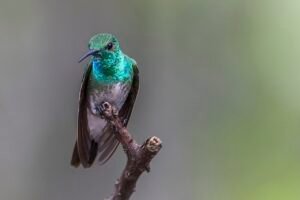
-🐦 Cinnamon Hummingbirds
Common in dry forests and coastal lowlands, this bronze‑green bird with cinnamon underparts is a striking and unusual hummingbird. It’s often seen defending flowering trees and gardens in Guanacaste and Nicoya.
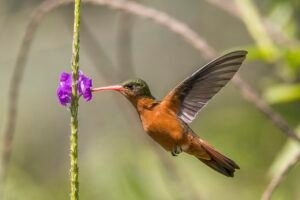
-🐦 Scaly‑Breasted Hummingbirds
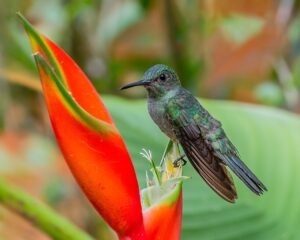
A large, plain species of lowland rainforests, with subtle green scaling on its chest. It’s less flashy but vital for pollination in dense tropical understories.
-🐦 Snowcap
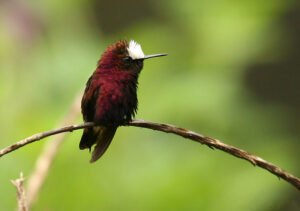
One of Costa Rica’s most striking hummingbirds — males have a pure white cap contrasting with deep wine‑purple bodies. Found in Caribbean foothills, it’s a favorite among birdwatchers at La Selva Biological Station.
-🐦 Black‑bellied Hummingbirds
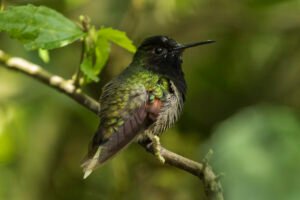
Inhabits humid highlands and is known for its glossy black belly and chestnut wings. It prefers shaded forest interiors and is often seen darting through mossy branches.
-🐦 Stripe‑Tailed Hummingbirds
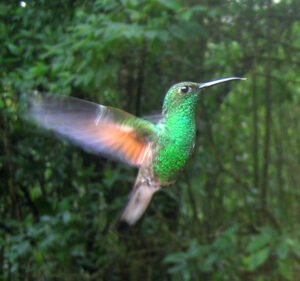
Found in Pacific slope forests, this species shows white tail stripes and chestnut wings. It’s agile and often feeds alongside butterflies in flowering clearings.
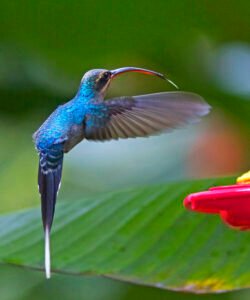
-🐦 Green Hermits
A long‑billed, brownish‑green hummingbird of deep rainforest interiors. It’s a “trap‑liner,” visiting a circuit of flowers daily. Its curved bill and long tail streamers make it unmistakable.
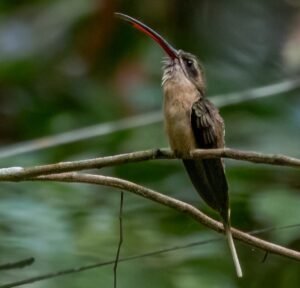
-🐦 Long‑billed Hermits
Similar to the Green Hermit but with an even longer bill, adapted for deep tubular flowers. Found in Caribbean lowlands, it’s a key pollinator for heliconias.
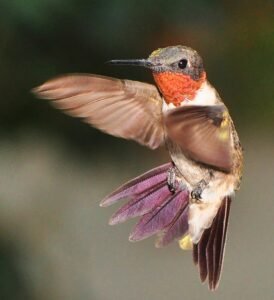
-🐦 Ruby‑throated Hummingbirds
A migrant visitor from North America, seen mainly in winter. Males flash a ruby‑red throat; females are green and white. Their arrival connects Costa Rica’s ecosystems to continental migration routes.
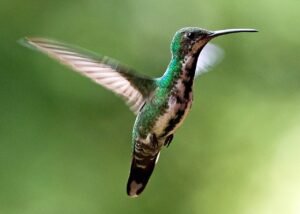
-🐦 Green‑breasted Mangos
A sleek, metallic hummingbird of coastal and urban zones, with a dark central stripe on its chest. It adapts well to gardens and hotel landscapes, making it a frequent sight for tourists.
-🐦 Talamanca Hummingbirds
This high-altitude specie inhabits elevations above 2,000 m. Its emerald body and violet throat shimmer in cold mountain light. It’s a signature bird of Cerro de la Muerte.
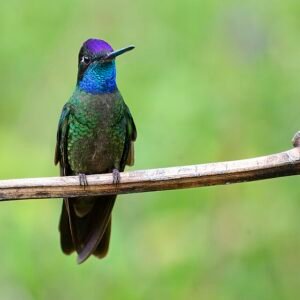
-🐦 White‑throated Mountain‑Gems
Found in southern highlands, males have a white throat bordered by green and chestnut flanks. Females are bronze with cinnamon underparts. They prefer cool, misty habitats.
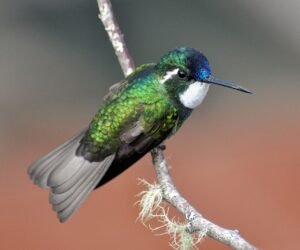
-🐦 Volcano Hummingbirds
Tiny and fiery, this species lives near volcanic summits like Irazú and Poás. Males display pinkish gorgets and buzz around alpine flowers. Despite its size, it endures cold winds and thin air.
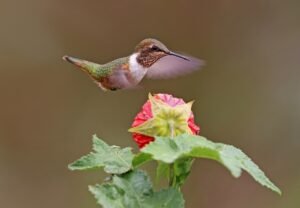
🌺 Vital Pollinators
Hummingbirds are some of Costa Rica’s most important pollinators, carrying pollen on their foreheads and bills as they move rapidly between flowers in search of high‑energy nectar. Their long, specialized beaks allow them to reach deep into tubular blossoms that bees and butterflies can’t access, making them essential partners for hundreds of tropical plants. Because they visit the same flowers repeatedly and travel long distances each day, hummingbirds help maintain genetic diversity across forests, mountains, and coastal ecosystems. Their presence is more than beautiful — it’s a sign of a healthy, thriving environment.
🌈 Costa Rica’s hummingbirds remind us that even the smallest creatures can define the spirit of a place. From mist‑soaked cloud forests to sunlit coastal mangroves, these jeweled birds stitch together the country’s ecosystems with color, movement, and ecological purpose. Their presence is a living symbol of Costa Rica’s commitment to conservation and its rare ability to protect beauty at every scale. Whether you’re a birder, a traveler, or simply someone who loves wild places, the hum of their wings becomes an invitation — to slow down, look closer, and appreciate the extraordinary life thriving all around you.
Anyone who visits Costa Rica will tell you – wildlife is ALL AROUND and this includes the dozens of our magnificent Hummingbird species. Do you want to live in the midst of our rainforest paradise? At RE/MAX WE SELL PARADISE, we list hundreds of tropical properties – homes, land, farms, estates & businesses – all within a stone’s throw of the amazing rainforests, mountains, beaches and resident exotic animals that make Costa Ballena a world-famous destination. Start your journey to Paradise by browsing our property listings here.
Cover & banner imaage – Stripe-Tailed Hummingbird – c/o Becky Matsubara, wikicommons.


