
Glass Frogs of Costa Rica
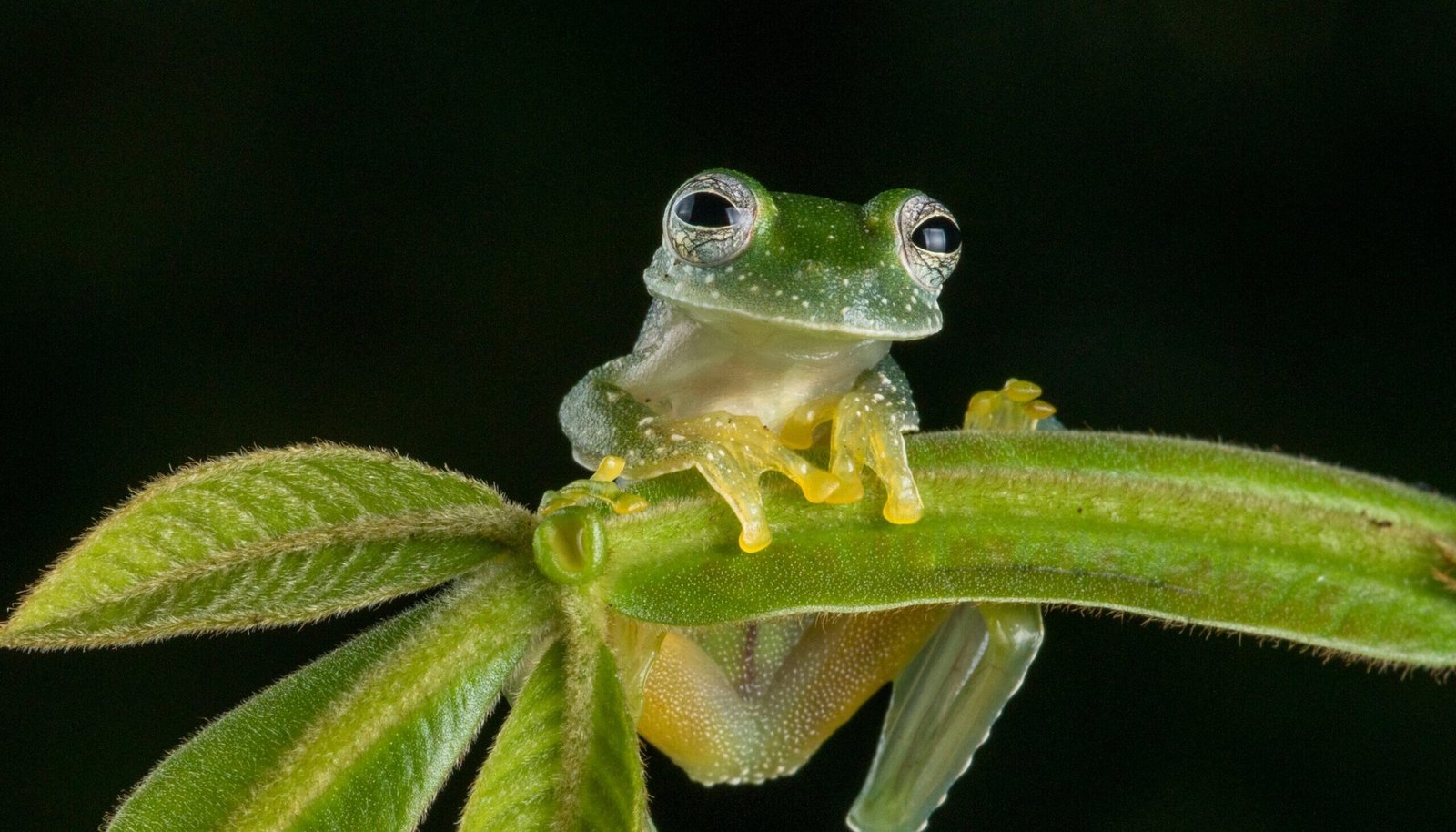
Costa Rica is among the most biodiverse places on the planet. The country’s animal life is exotic, tropical, brilliant, unique and captivating. This fame covers the local Poison Dart Frogs – but often overlooks the equally captivating Glass Frogs. With their translucent or even transparent skin (hence the name) and striking coloring, these arboreal amphibians have finally made it to the pages of our blog.
🐸 SEE-THRU AMPHIBIANS
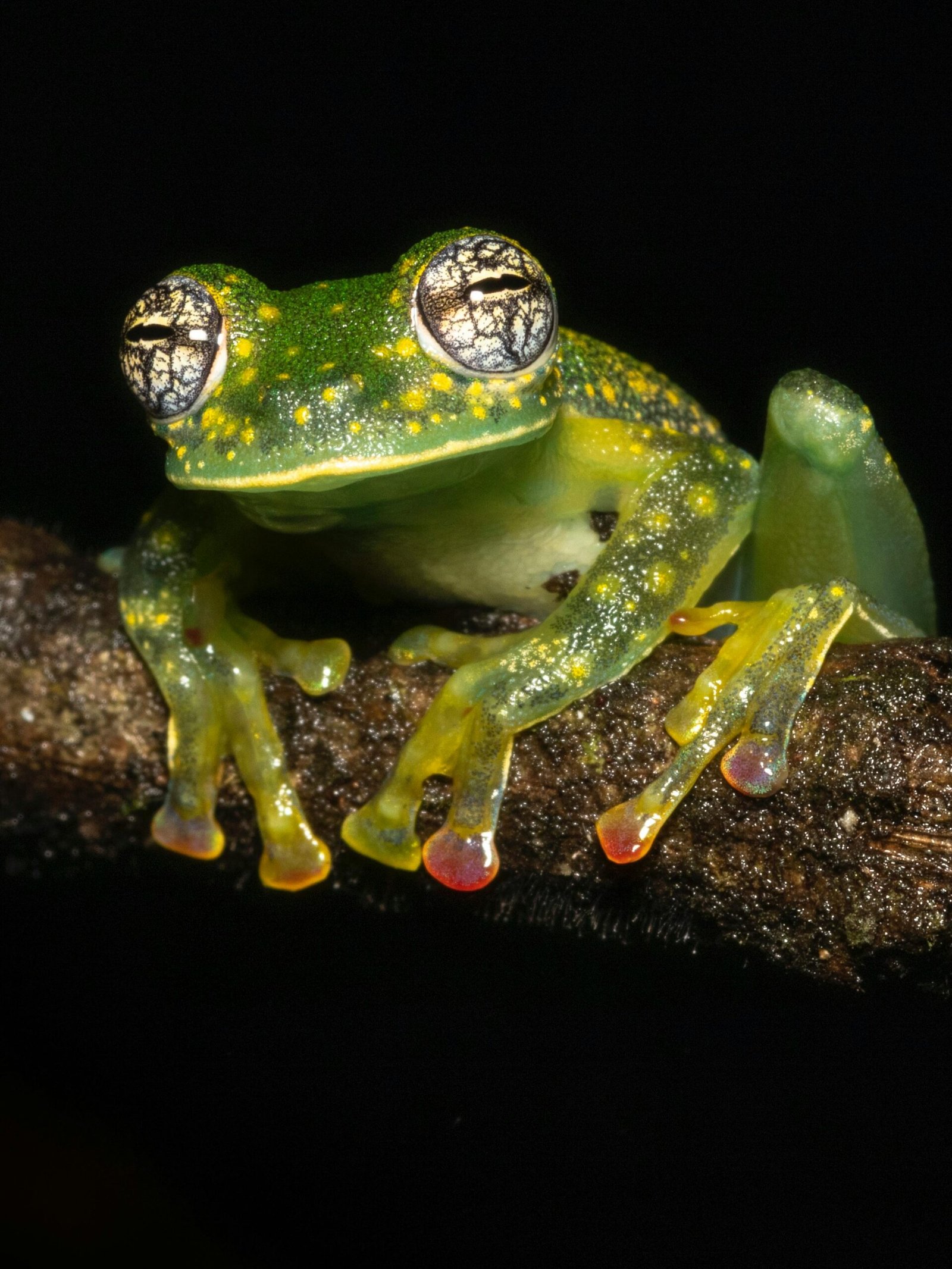
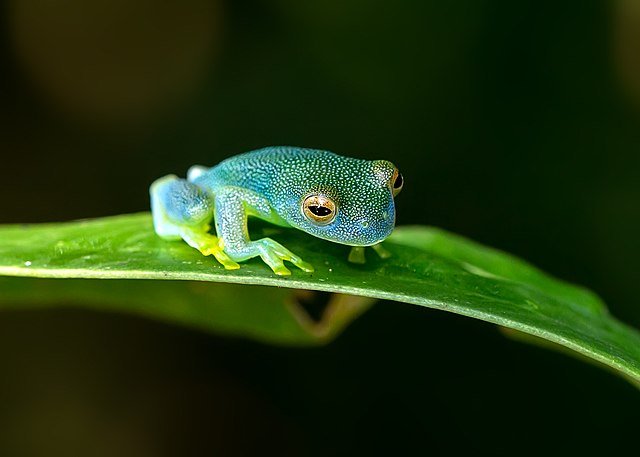
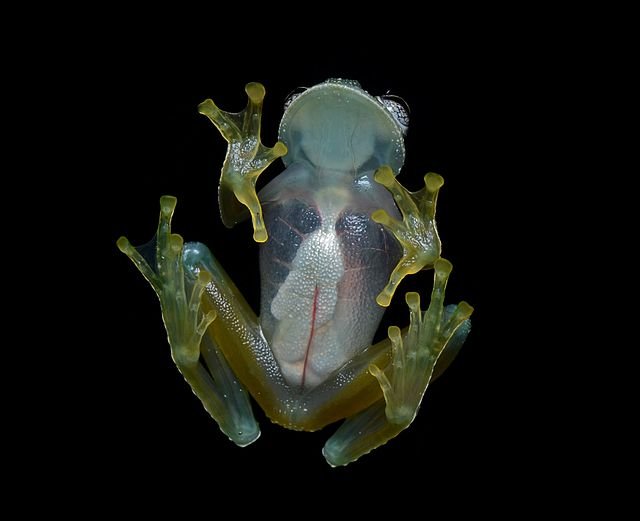
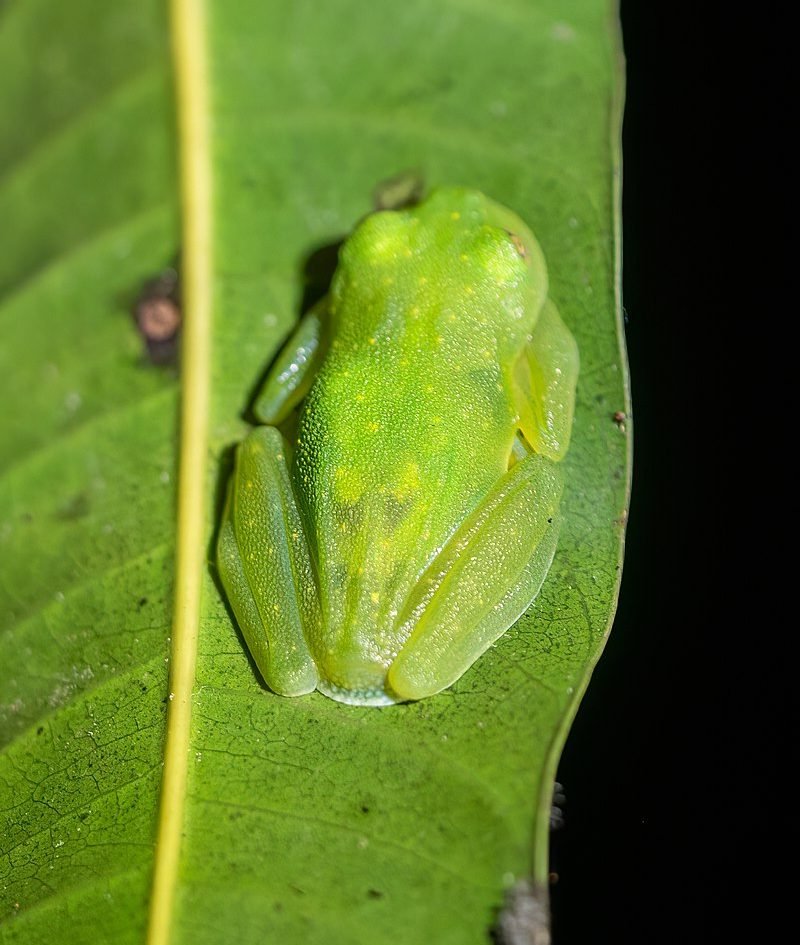
Most Glass Frog species are lime green in color and wear sections of a translucent or even transparent skin – you can see right inside their bodies. Organs like the beating heart, liver, kidneys, intestines and blood vessels become visible – and we may have a faint idea of WHY nature, evolution and natural selection has decided that transparent skin is an advantage.
🐸 WHAT IS THE REASON FOR THE TRANSPARENT SKIN?
A Mystery!
Nature does not act without reason. Every trait – whether physical or behavioral – exists to aid the reproduction and survival of the specie. NOTHING in nature is an accident. So as it goes, there must be a very good reason for the Glass Frogs’ partial translucency & transparency, that much we knew. But for the longest time, we couldn’t quite figure it out – the obvious answer was ‘camouflage’ but under differing lighting conditions it seemed that the attributes were not that effective as regular camouflage successfully employed by many other frog and animal species.

The Mystery Deepens
We also knew that other than general translucency, the frogs also had more or less opaque backs and usually very translucent legs and fingers – and therein lay the key. The opaque backs, more translucent bodies and nearly transparent legs & fingers create a sort of gradient which makes the edges of the frog blurry & less defined, and therefore masks the frogs’ true shapes. Add to that the lime green coloring, which blends with leaves and plants, and you’ve got a much more effective camouflage system.

Edge Diffusion!
This weird camouflage phenomenon, in which the frog’s edges are softened to match the relative brightness of its surroundings, is referred to as edge diffusion. And if that was not enough – when resting or threatened, Glass frogs have a fascinating ability to conceal their red blood cells which enhances their transparency. Their livers are coated with a reflective guanine crystals, which helps scatter light and obscure the red color of their blood cells. By directing most of their red blood cells to the liver, the Glass Frogs reduce the amount of visible pigmentation in their bodies, making them appear even more transparent.
🐸 COSTA RICAN GLASS FROG SPECIES
14 species of Glass Frogs call Costa Rica home – and more are being discovered, so the true number is very likely much higher. Here we present a few of the best-researched and known examples:
BARE-HEARTED GLASS FROG or KERMIT FROG
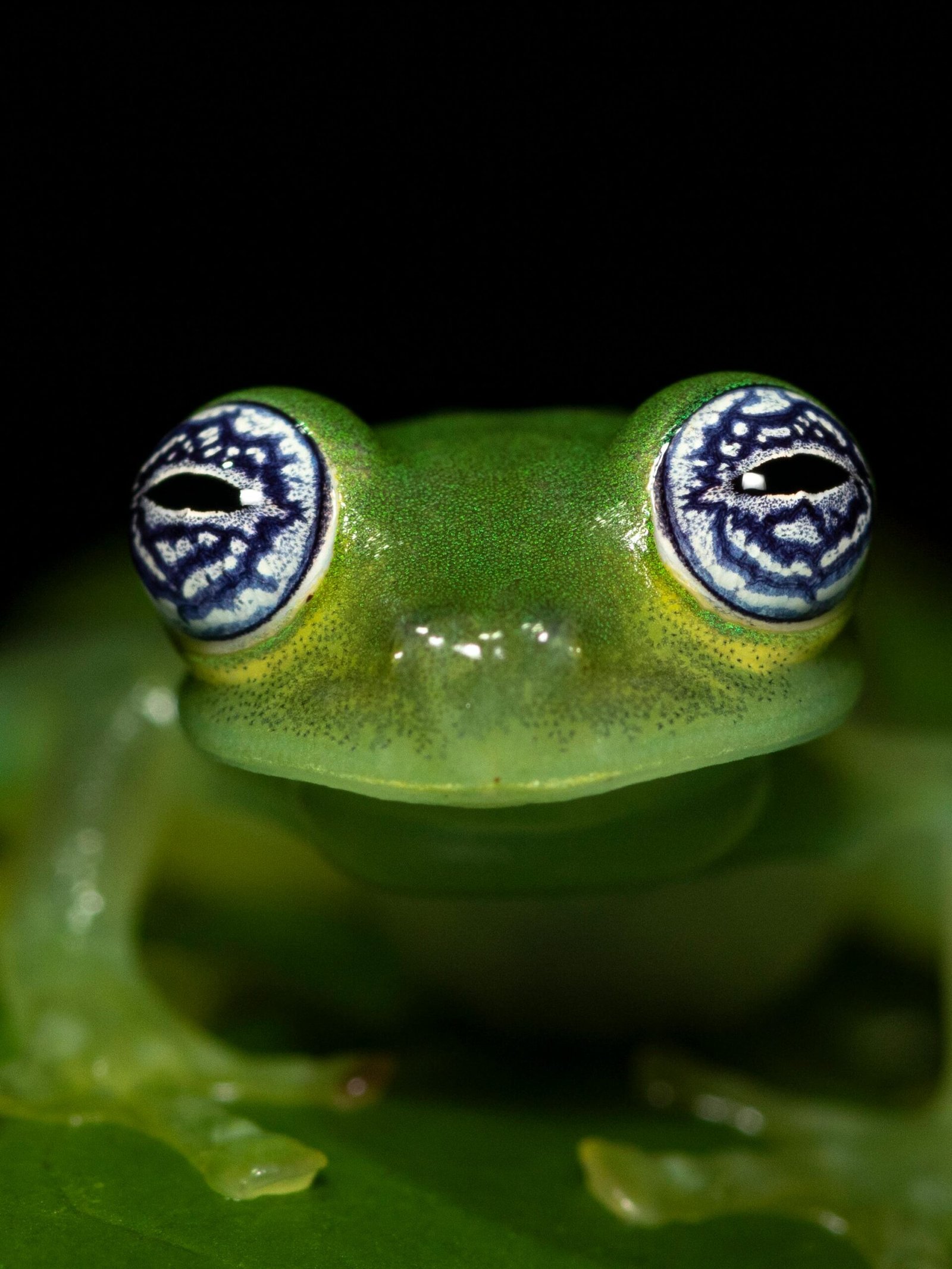
Found in central and south-eastern Costa Rica, these frogs have the most transparent bellies of all Glass Frog species. This specie has only been discovered, in 2015, in the Talamanca Mountains of Costa Rica – and it got world-famous attention due to its resemblance to Kermit the Frog.

STARRETT’S GLASS FROG
Found in humid mountain forests around Costa Rica, especially around the central spine. It is threatened by habitat loss in its range area
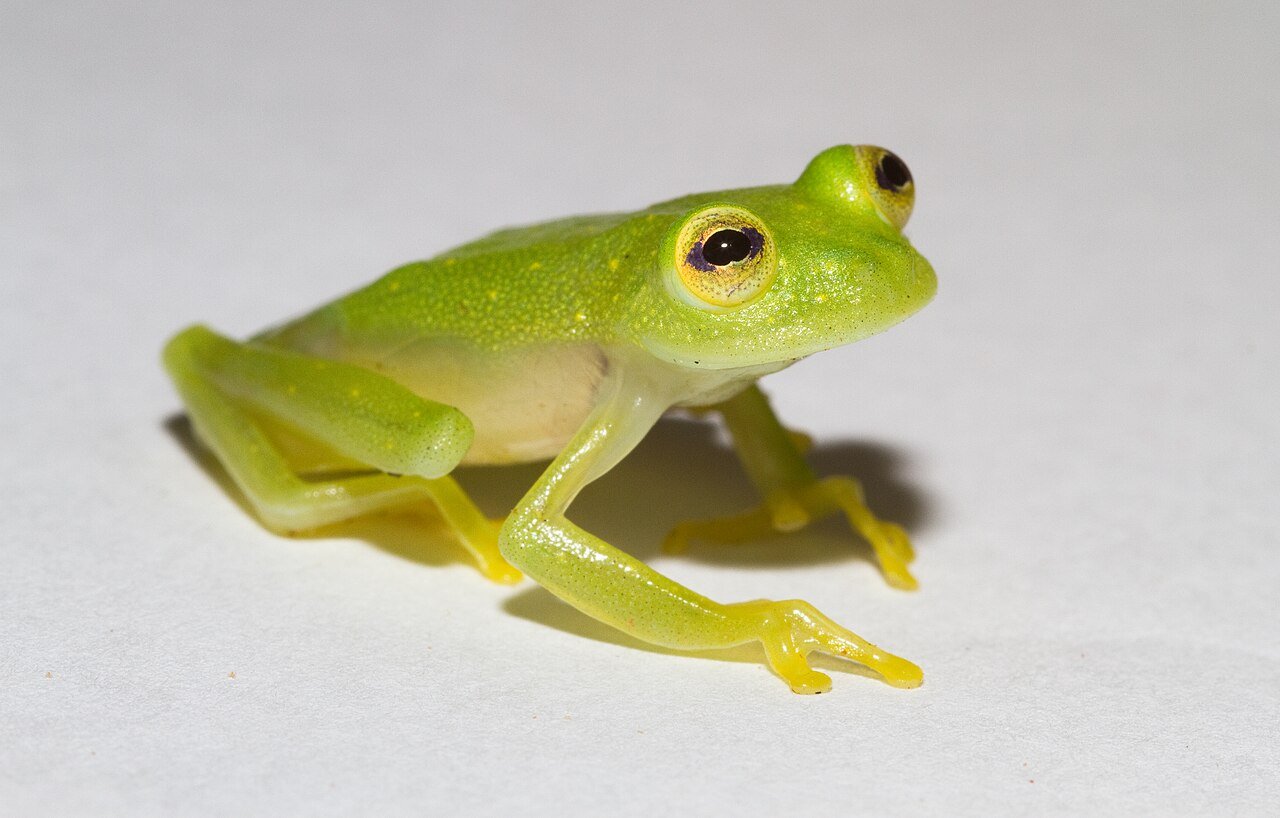
YELLOW-FLECKED GLASS FROG
Found in Costa Rica at elevations up to 1,500 meters. This hardy Glass Frog can survive along streams in altered habitats such as pastures, orchards, and even towns and cities.

SAN JOSE COCHRAN FROG
This Glass Frog can handle altitudes up to 2,000 meters. Unfortunately, it has not been seen in Costa Rica since 1986 – an we don’t know why, despite numerous survey efforts to locate the species.
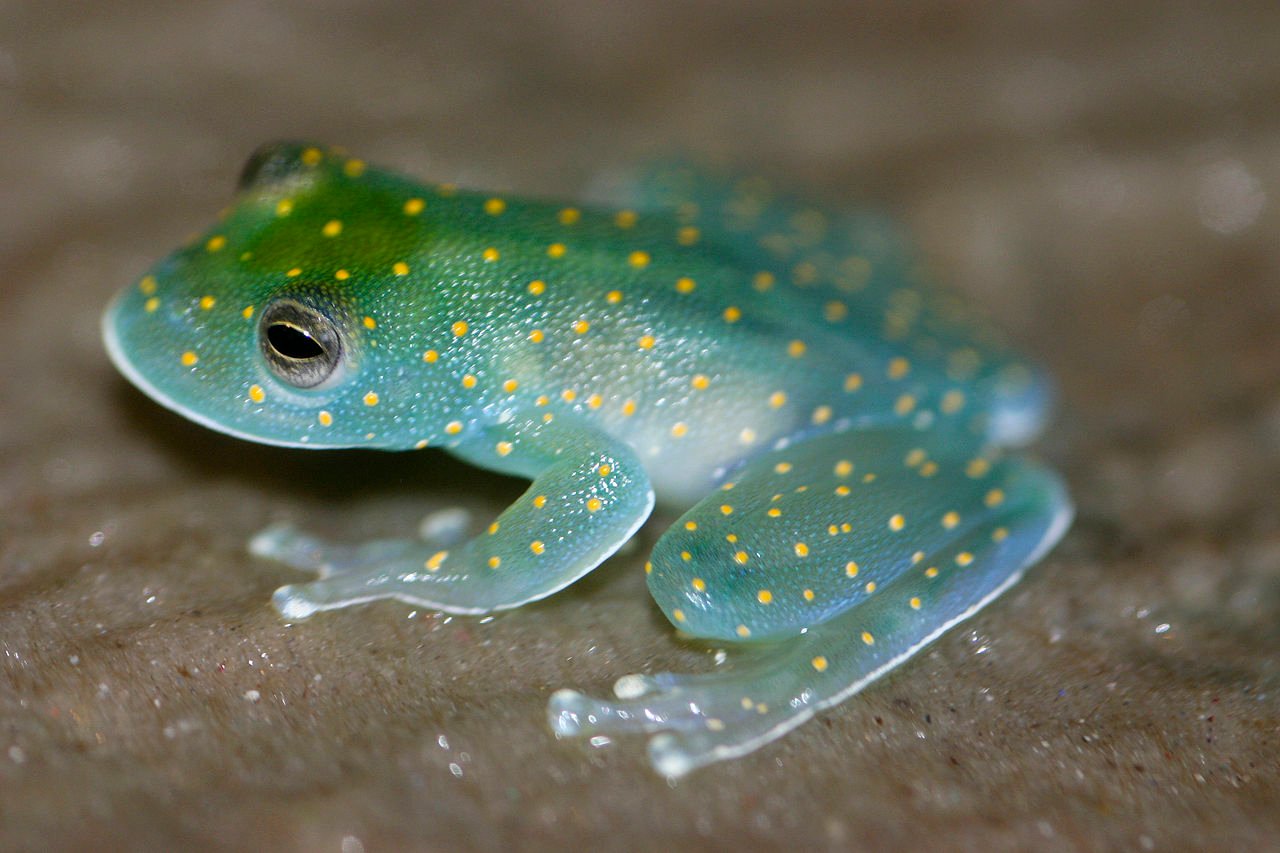
FLEISCHMANN’S GLASS FROG
The most populous and common of Costa Rica’s Glass Frogs, this specie lives in low and mid-altitude wet forests.

EMERALD GLASS FROG
These frogs prefer to live amongst mature old growth forests. While not under threat as a specie, the Costa Rican Monteverde population has recently collapsed – however the frog remains common in other areas of Costa Rica.
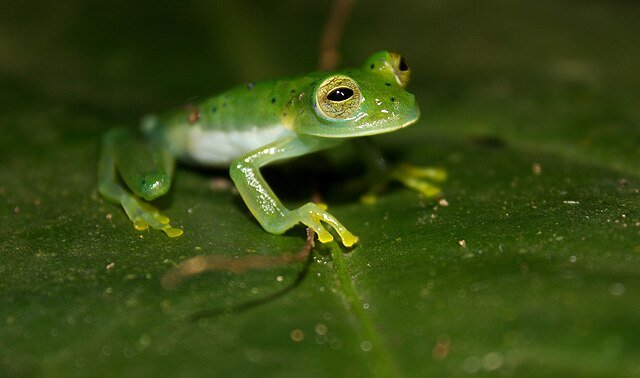
SURETKA GLASS FROG / STRIPED BACK GLASS FROG
Preferring lowland forests up to 600 meters in elevation, these frogs are not deterred by degraded habitats. The frog is named after the Suretka locality in Talamanca, Costa Rica, where can be found.

LIMON GIANT GLASS FROG
Named after a part of its range – Limón, Costa Rica – this frog is also known as Holly’s Glass Frog and Ghost Glass Frog.
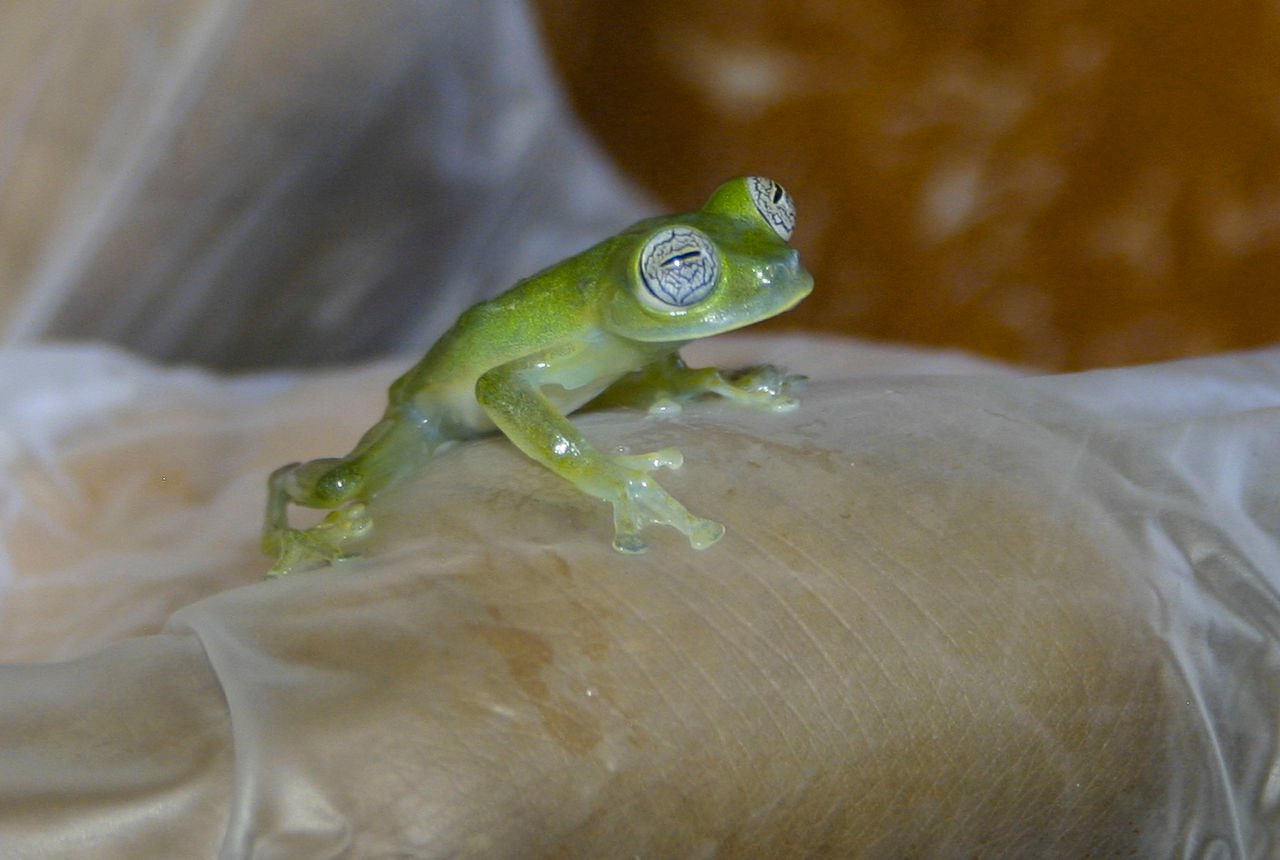
GRANULAR GLASS FROG
Their grainy skin, which can range through several colors, helps the frogs increase the potency of their camouflage.

POWDERED GLASS FROG
Rather rare in Costa Rica, these frogs prefer low forests, sometimes no higher than 300-900 meters, depending on the population. They can survive in disturbed habitats.
🐸 THE LIVES OF GLASS FROGS
Habitat and Activity
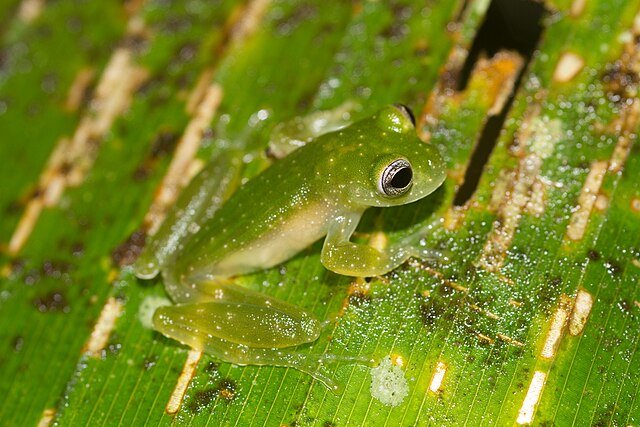
Glass Frogs rarely grow longer than an inch—so tiny that raindrops have reportedly killed them. They thrive in Central and South America, especially near rivers and streams in rainforest regions. Some species now adapt to disturbed areas like pastures, parks, and even urban spaces, as long as patches of habitat remain.
These frogs stay active at night. If you suspect they live nearby, listen for their soft, chirping calls after sunset. Their voices often reveal their presence long before your eyes do.

True Frogs of the Trees
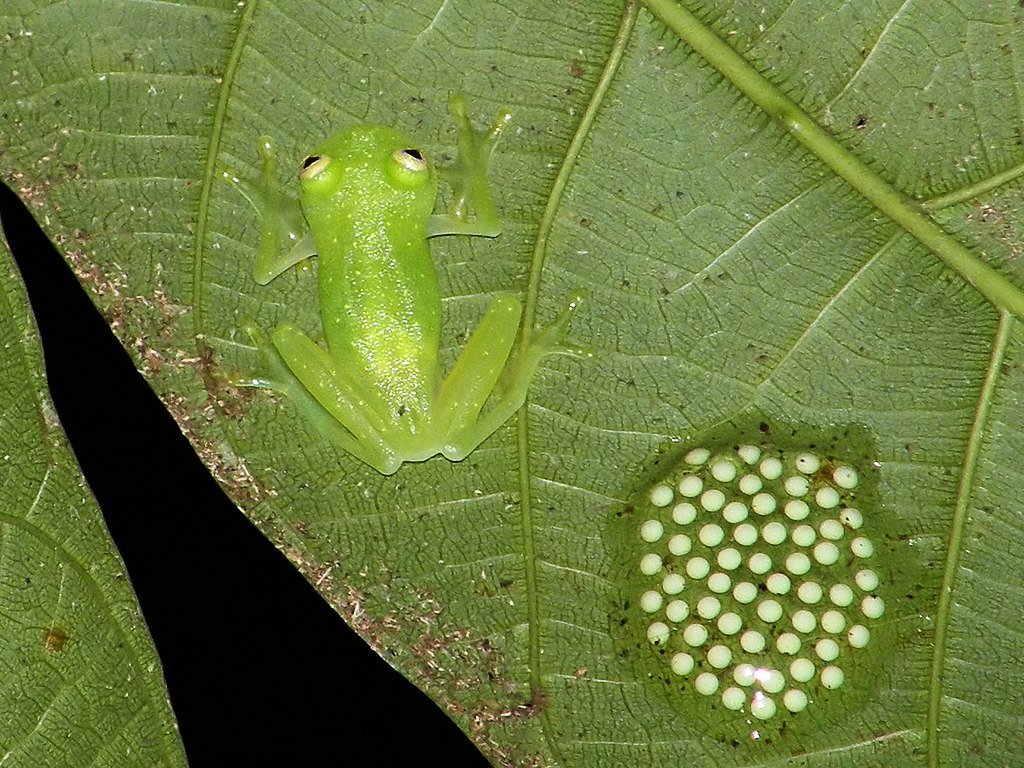
Glass Frogs spend most of their lives high in the trees, avoiding predators that roam the forest floor. The canopy offers safety and shelter. During mating season, males descend to find partners near streams. Females lay eggs on the underside of leaves that hang above water.
Males guard the eggs until they hatch. Some females briefly brood them after laying. Once the tadpoles emerge, they drop into the stream below. Parental care ends there. The tadpoles swim powerfully, using strong tails and low fins—perfect for surviving fast-moving mountain waters

Diet
Glass Frogs hunt crickets, moths, flies, spiders, and sometimes smaller frogs. They don’t sit high on the food chain. Birds, snakes, fish, lizards, and even larger frogs eat them. Some spiders also target them.
Their eggs face constant danger. Certain flies lay maggots that devour the embryos. Still, eggs fare better on leaf undersides than in water. In streams, fish, shrimp, insects, snakes, birds, and mammals feast freely. A leaf offers shelter—just enough to give the next generation a fighting chance.
Calls
Male glass frogs chirp or whistle to attract mates, especially during breeding season. Some species call year-round, not just when courting. Their voices stay soft and melodic, weaving into the rainforest’s natural soundtrack. Each species sings a slightly different tune, but most blend gently with rustling leaves and flowing water.
🐸 THREATS
Four out of five major threats to tiny Glass Frogs come directly from human actions: deforestation, invasive species, pollution, and illegal pet trade. Their skin acts like a sponge, making them extremely vulnerable to toxins in air and water. These pressures have pushed many populations into decline.
Another danger lurks in the form of chytridiomycosis—a deadly fungal disease. Though the fungus occurs naturally, global trade and habitat disruption help it spread. Human movement and environmental stress give this pathogen new footholds, turning isolated outbreaks into widespread losses.

CHYTRIDIOMYCOSIS
Chytridiomycosis drives sharp declines and extinctions in frog populations across the globe. The fungus kills some frogs slowly, others in devastating waves. Scientists have tested treatments, but none work reliably in wild habitats. No large-scale solution has emerged.
This disease affects nearly one-third of amphibian species worldwide. It ranks among the most serious threats to global biodiversity. Research links the international pet frog trade to the spread of the fungus into native ecosystems. Controlling this pathway remains crucial to protecting vulnerable species.
🐸 GLASS FROGS ARE AMAZING – AND THE FACT THAT THEY ARE NOT WELL-UNDERSTOOD ADDS TO THE ALLURE
Glass Frogs stay tiny and elusive, which makes them difficult to spot and study. Many species live deep in thick rainforest terrain. Researchers struggle to track their numbers, observe wild behavior, or define their ecological roles. New species still emerge, adding mystery to their story.
If you hear chirping or locals mention sightings, grab a flashlight and explore after dark. Kids especially enjoy spotting these translucent wonders. Just watch your step—Glass Frogs bruise easily, and some reports say raindrops can harm them. Admire them gently, without touching, and let their fragile beauty shine from a safe distance.
🐸 RESOURCES
- Costa Rica Amphibian Research Center – https://cramphibian.com/
- Veragua Rainforest Article – https://truewindhealingtravel.com/costa-ricas-veragua-rainforest-ecotourism-and-frogs/
Do you dream of living in the midst of breathtaking tropical scenery and amongst amazing animals like the cute & captivating Poison Dart Frogs? At RE/MAX WE SELL PARADISE, we list hundreds of tropical properties – homes, land, farms, estates & businesses – all within a stone’s throw of the amazing rainforests, mountains, beaches and resident exotic animals that make Costa Ballena a world-famous destination. Start your journey to paradise by browsing our property listings here.
Cover photo c/o Ivan Rojas, Pexels


