
Our Chirpy House Gecko
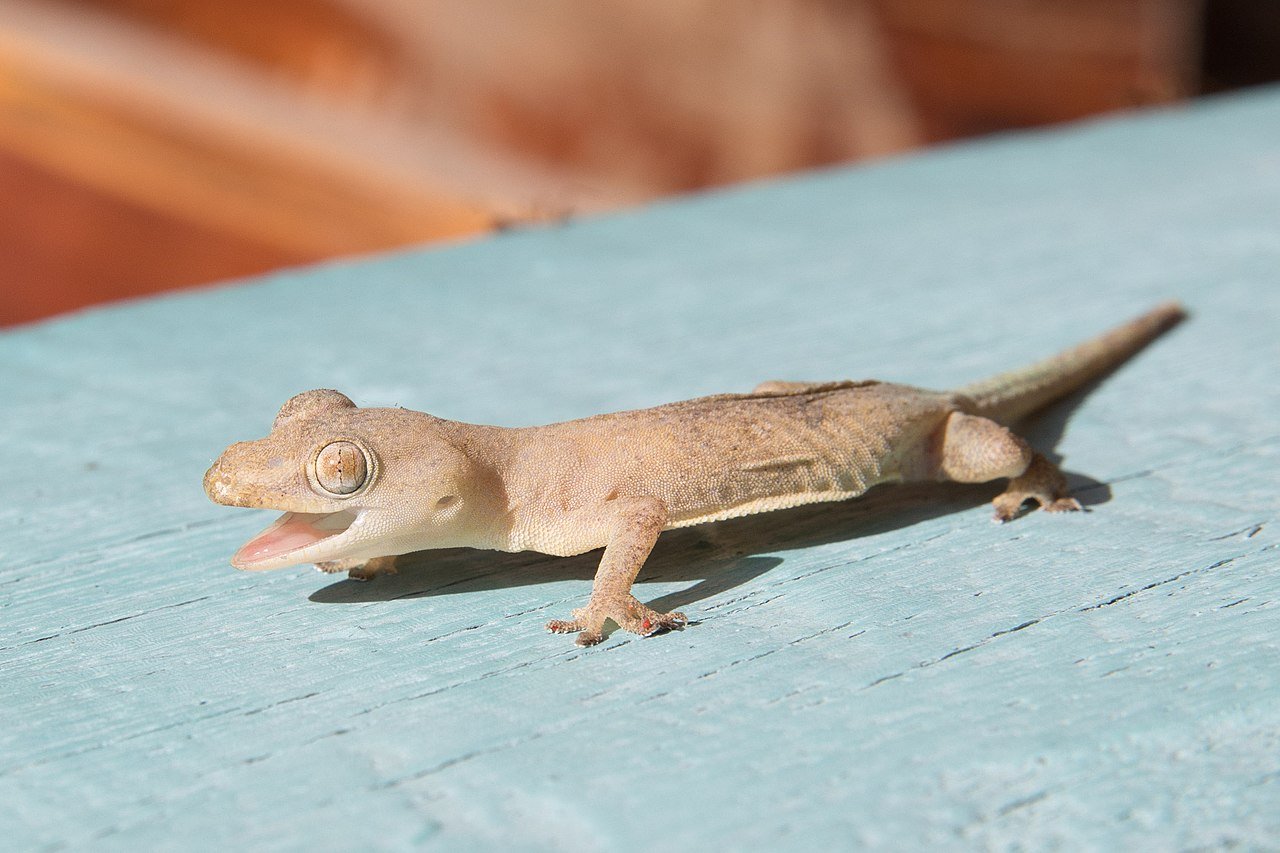
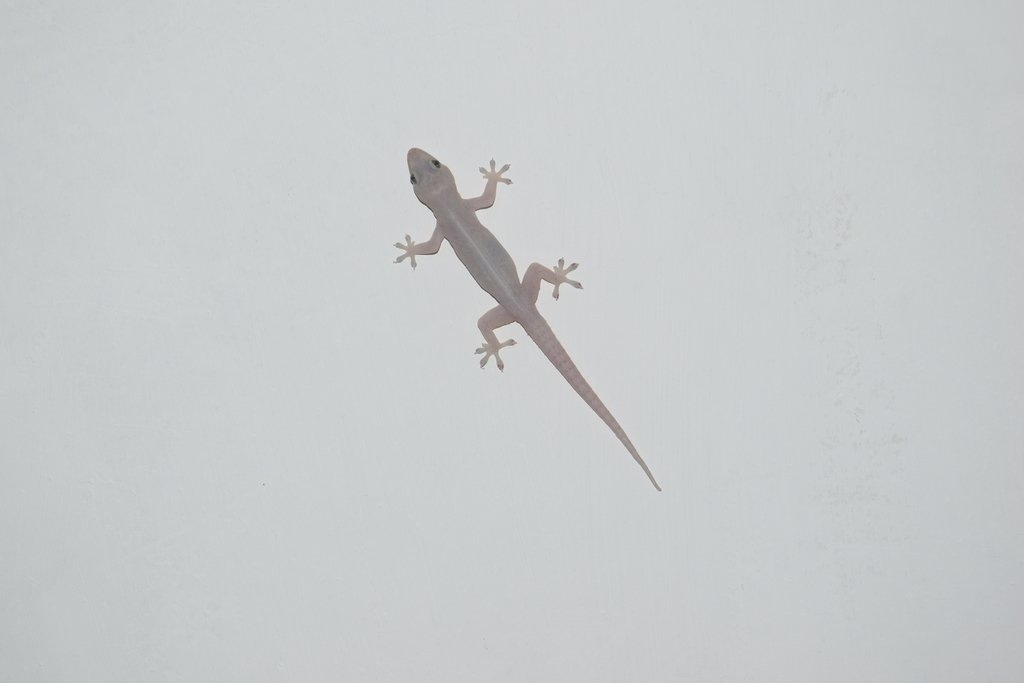
The Hemidactylus frenatus, commonly known as the House Gecko, is a small, nocturnal lizard that has successfully colonized urban and rural areas across Costa Rica. This is the main specie, though there are a few other ‘house gecko’ types present in Costa Rica and across the world. In this article we focus on H. frenatus but include photos of a few related species. Originally native to Southeast Asia, this adaptable lizard arrived in the Americas via cargo ships and trade routes. Today it thrives in warm, humid environments and has become a familiar sight in homes, hotels, and restaurants throughout the country. Its pale, translucent skin and large, lidless eyes make it instantly recognizable, especially when it clings to walls or ceilings near light sources.
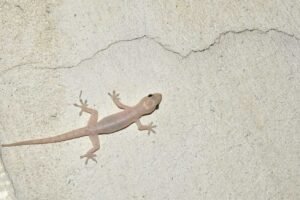
I have shared my rooms and homes with this critter in Australia, Thailand, Malaysia, Mexico, Panama, Colombia and, of course, Costa Rica. I do not mind them at all as I can often hear them, in the middle of the night, running across lumber furniture in chase of an insect.
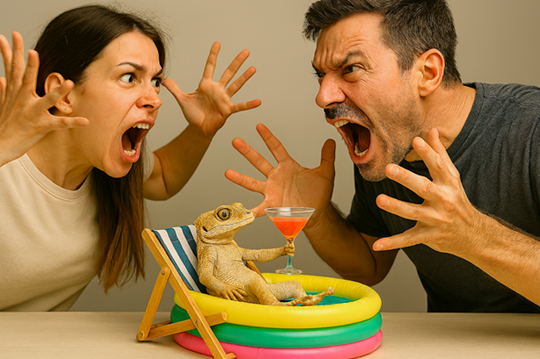
But I know people are deeply divided when it comes to the House Gecko – as they are about every single issue, these days. You either LOVE or HATE this critter – no in-between!
“I love these cute buggers, they bark like dogs, eat all the flies, and mind their own business”
“Get these disgusting vermin out of my house NOW!”
🏠 Why House Geckos Love Costa Rican Homes
Costa Rica’s tropical climate and abundant insect life create ideal conditions for Hemidactylus frenatus. These geckos prefer sheltered indoor spaces where they can hunt, at night, without interference.
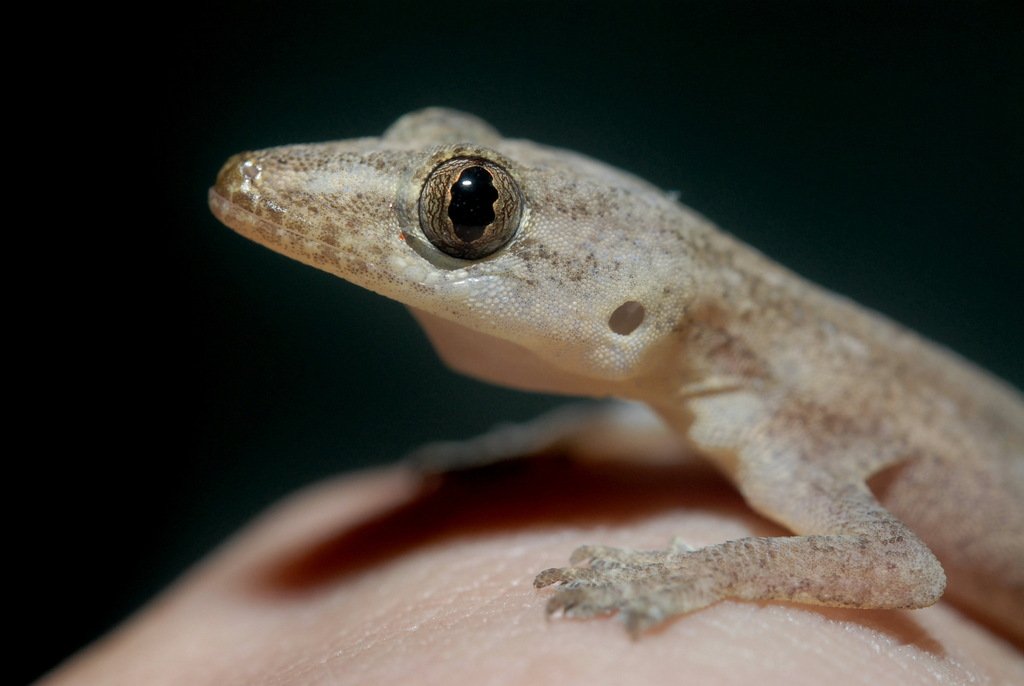
A climate-controlled, dry house full of sleeping souls is a PERFECT habitat. And since it gets dark here by early evening, there are a few hours when the bright house lights attract the very insects which will become the geckos’ nightly dinner!
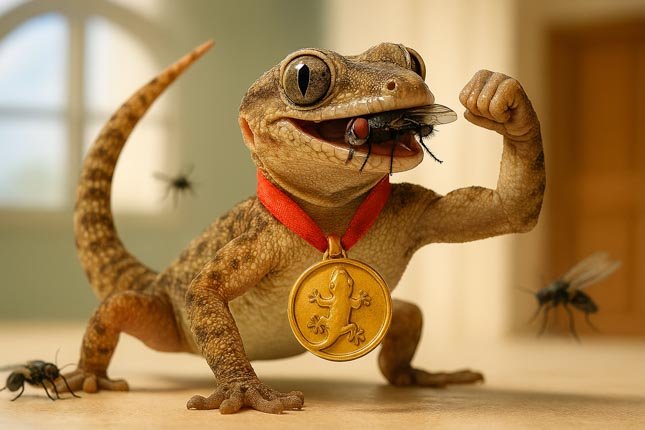
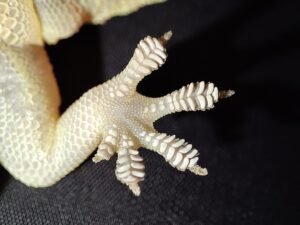
You’ll often find them behind picture frames, inside electrical appliances, or perched near ceiling lights. Their specialized toe pads, called lamellae, allow them to scale vertical surfaces and cling to glass, tile, and painted walls with ease. Artificial lighting attracts insects and geckos follow the food source, making homes and businesses perfect hunting grounds.
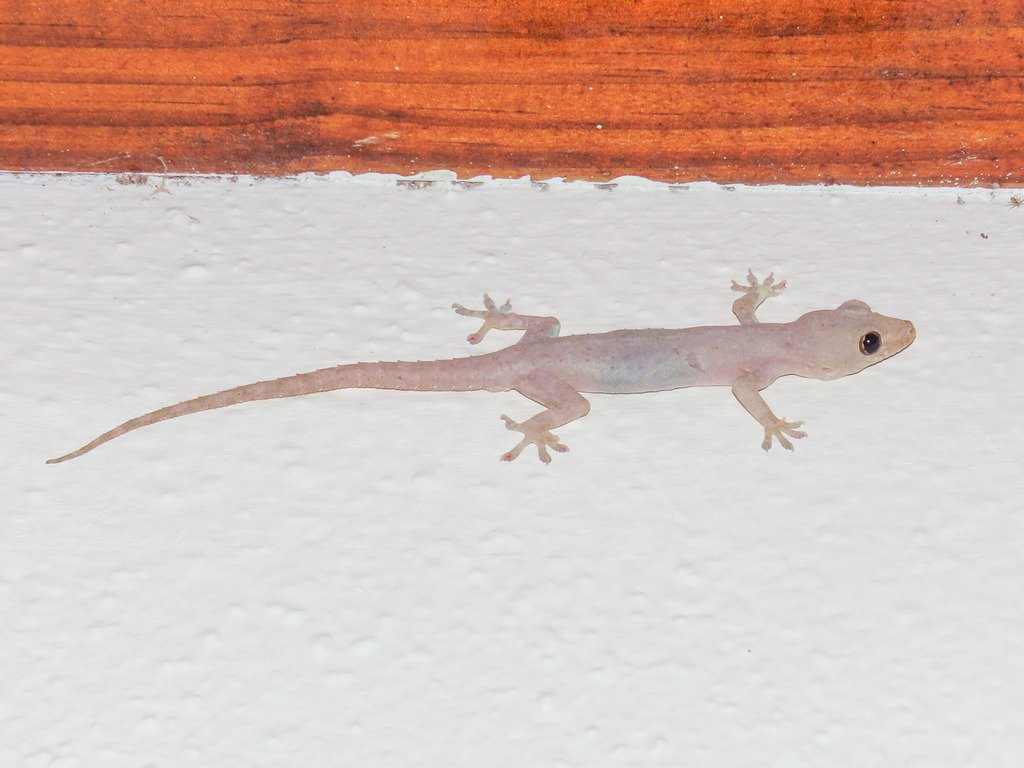
Their presence may startle guests, but they pose no threat to humans and rarely interact directly with people.
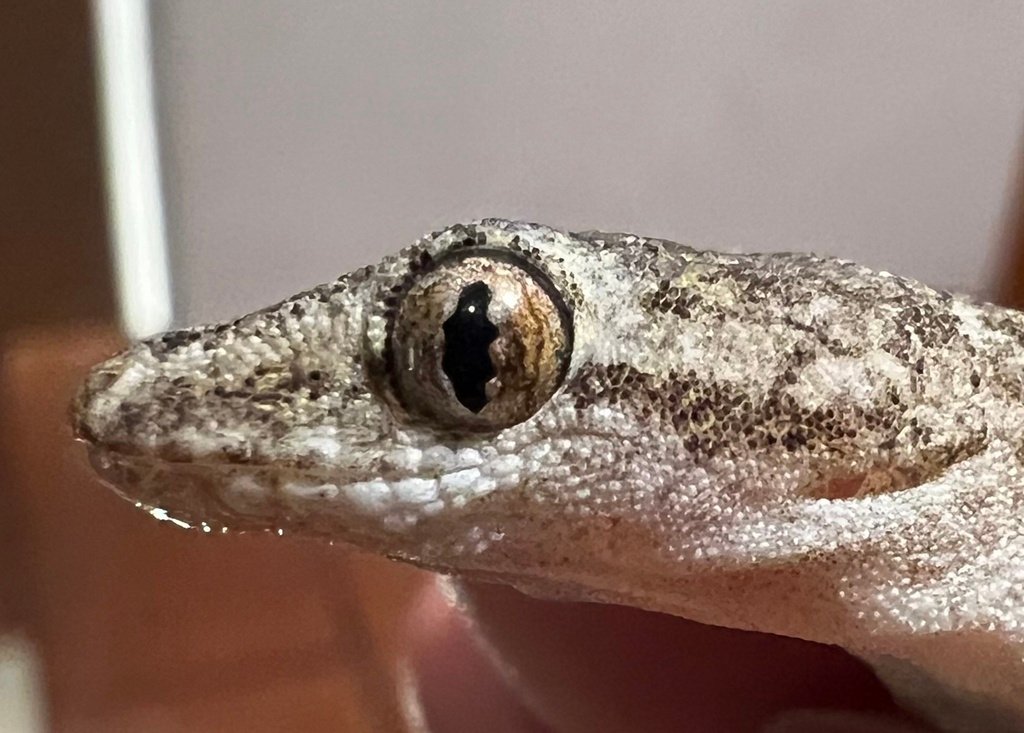
🌙 Nighttime Behavior and Vocalizations
House Geckos become active after sunset, emerging from crevices and corners to hunt and communicate. Males produce loud, repetitive chirps that sound like “TCHAK-TCHAK-TCHAK,” especially when defending territory or attracting mates. Females respond with softer calls, creating a subtle nighttime chorus in gecko-populated areas. These vocalizations help establish dominance and mating readiness.
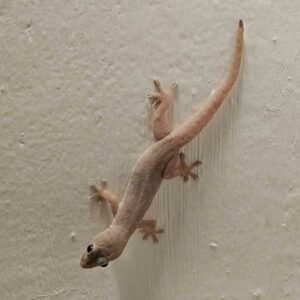
Geckos rely on stealth and speed to catch prey, often darting across walls or ceilings with surprising agility. Their sudden movements and distinctive sounds contribute to their reputation as mysterious nighttime visitors.
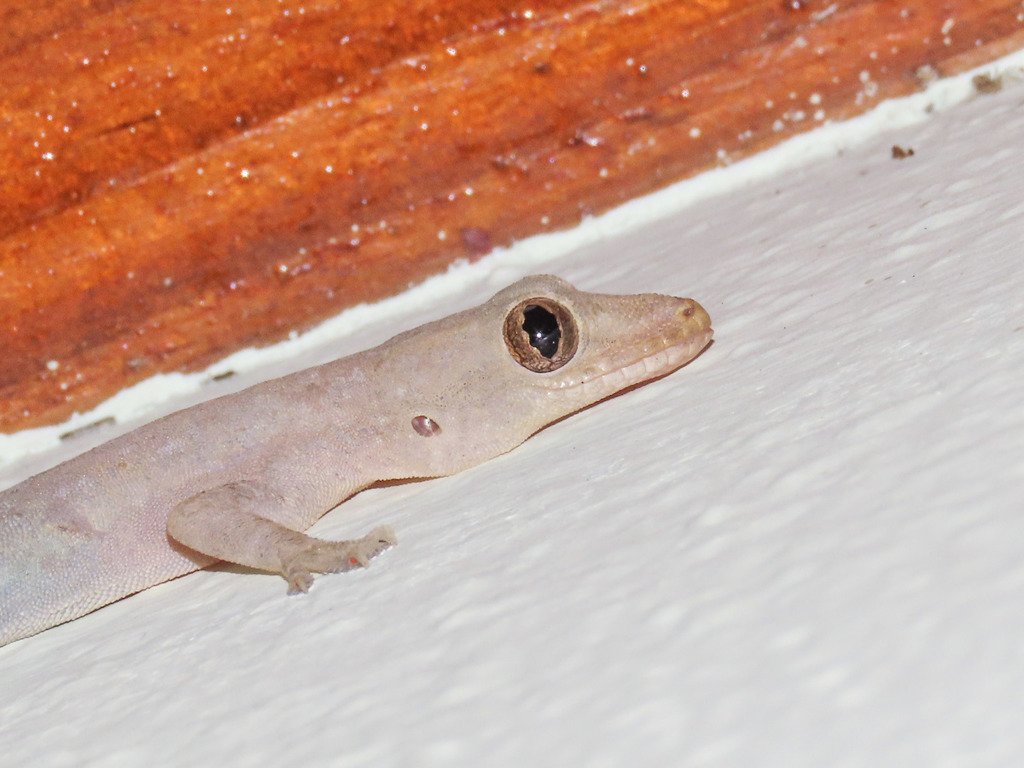
🐛 Natural Pest Control Champions
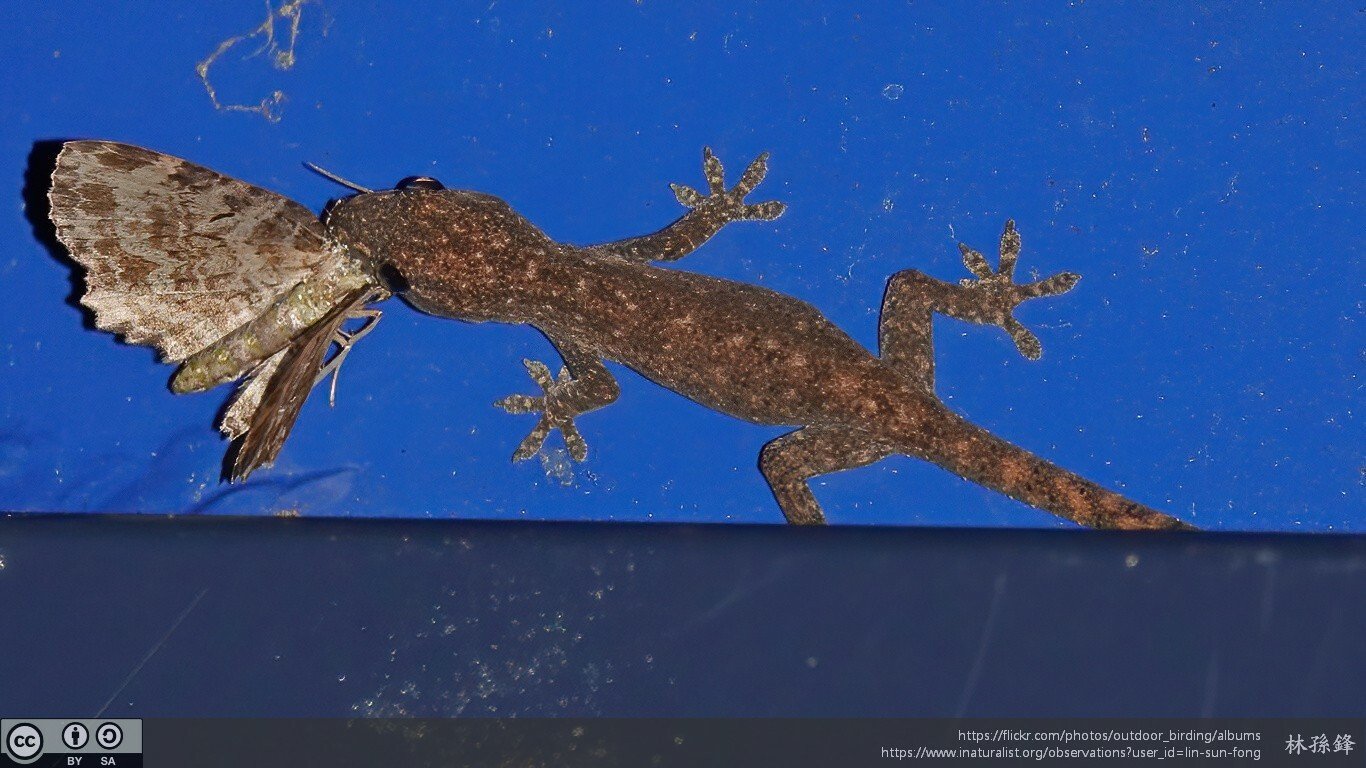
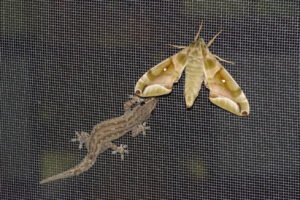
One of the most beneficial aspects of Hemidactylus frenatus is its role in pest control. These geckos feed on a wide variety of insects including mosquitoes, flies, moths, and cockroaches. You will often see the geckos swallow bugs that seem way too big to go down.
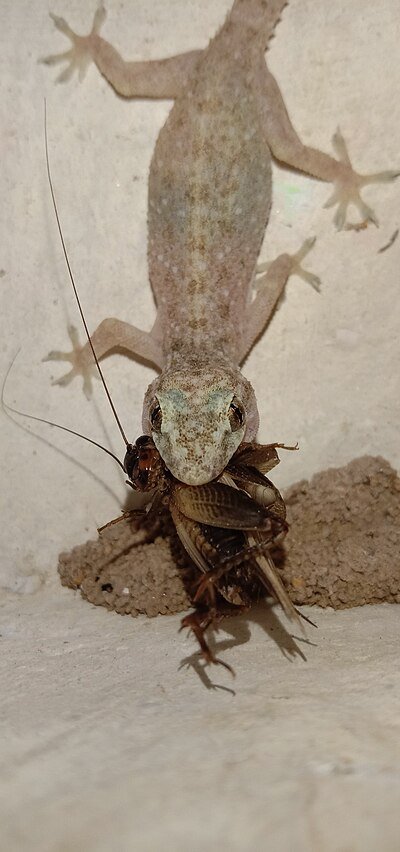
By reducing insect populations indoors, they help limit the spread of disease and improve comfort in tropical homes. Unlike chemical repellents, geckos offer a natural, ongoing, sustainable solution to pest management. Yes you have to clean up after them somewhat – but for many of us, that is a small price to pay.
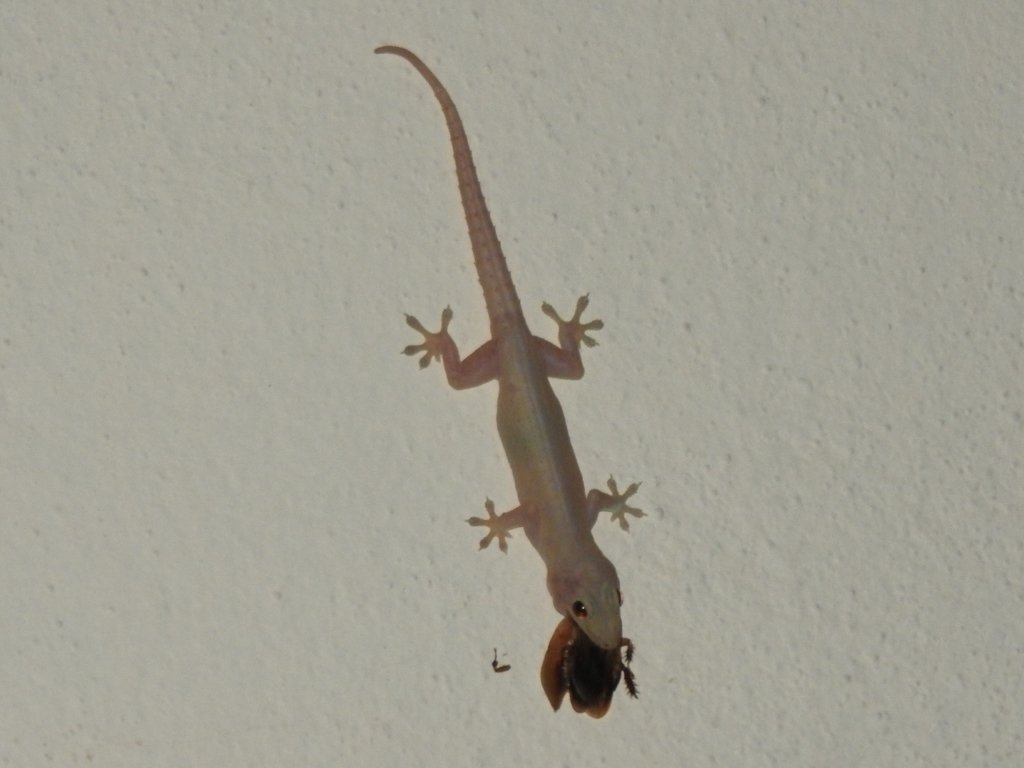
Their hunting strategy involves ambushing insects near light sources or actively chasing them across surfaces. In eco-conscious communities, their presence is often welcomed as part of a balanced indoor ecosystem.
🦎 Gecko Superpowers: Sticky Feet That Defy Gravity
Geckos can run up walls and even hang upside down thanks to millions of microscopic hairs on their toes called setae. These tiny structures create a molecular attraction to surfaces, giving geckos an almost magical grip on glass, tile, wood, and even ceilings. Their feet don’t use glue or suction — just pure physics — allowing them to sprint across walls with ease and disappear into the rafters like tiny, gravity‑defying ninjas.
📸 Gecko Quirks: The Strange Little Things They Do
Geckos come with a whole toolbox of odd behaviors that make them endlessly entertaining. When startled, some species let out a tiny “scream,” a defensive burst meant to shock predators. Males often chase and wrestle each other on walls to defend territory, which sometimes ends with one losing its grip and plopping to the floor.
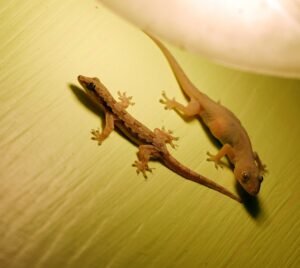
They lick their own eyes because they have no eyelids, keeping their vision clear with a quick swipe of the tongue. And in one of their strangest habits, geckos shed their skin and immediately eat it — a clever way to recycle nutrients and avoid leaving a scent trail for predators.
📜 Folklore
Across cultures, the humble House Gecko is steeped in rich folklore, symbolizing protection, prosperity, and spiritual connection. In Southeast Asia, they are seen as ancestral guardians—especially in Thailand, where their chirping is believed to carry messages from the spirit world. Chinese traditions associate them with wealth and household luck, while Japanese folklore views them as protectors against evil spirits.
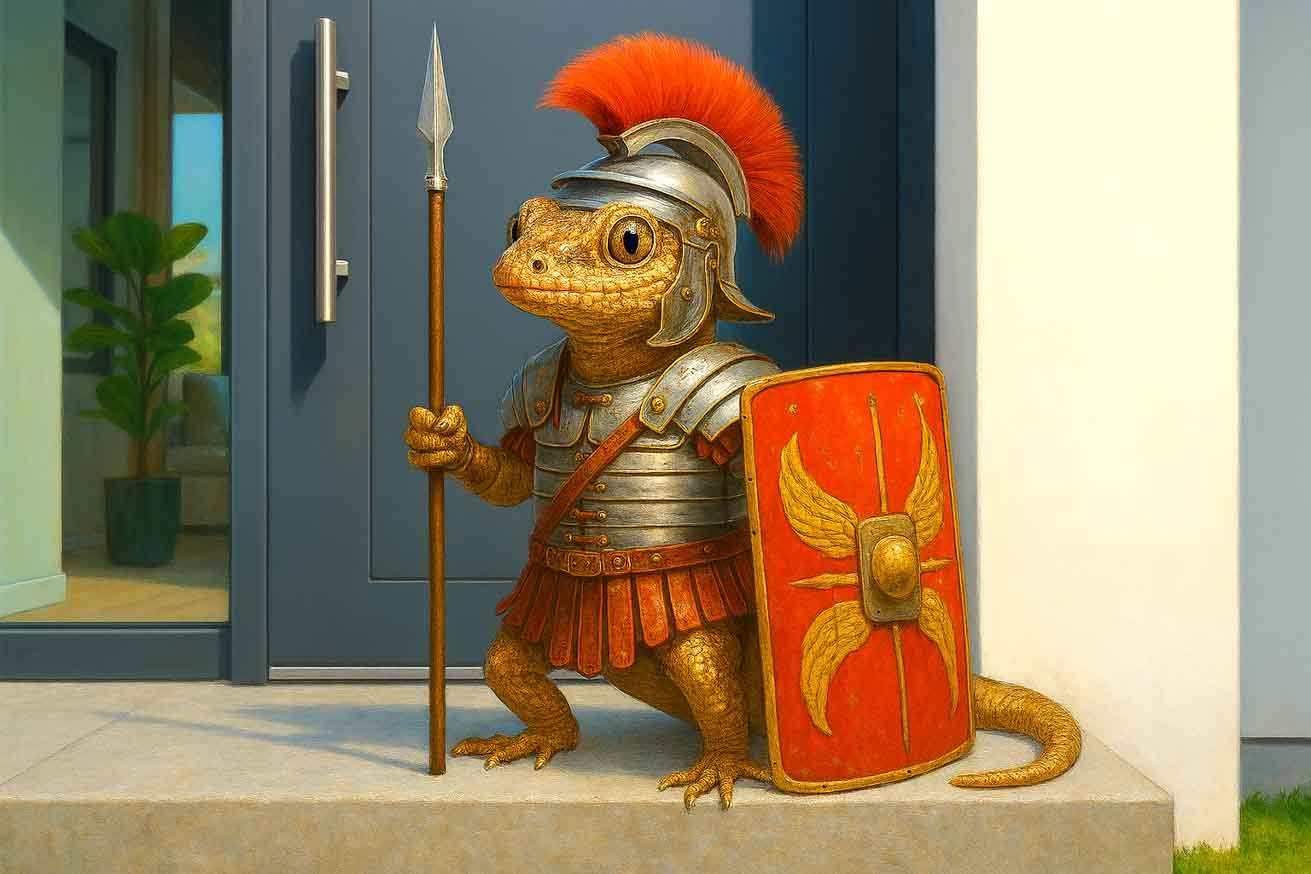
In African stories, local geckos are clever home guardians, warding off misfortune and symbolizing fertility. Pacific Island cultures revere geckos as spiritual beings linked to ancestors and natural wisdom. Even in Aboriginal Australia, geckos appear in Dreamtime tales as resilient symbols of transformation. Despite their small size, House Geckos carry global significance as emblems of adaptability, intuition, and sacred protection.
🥚 Reproduction and Egg-Laying Habits
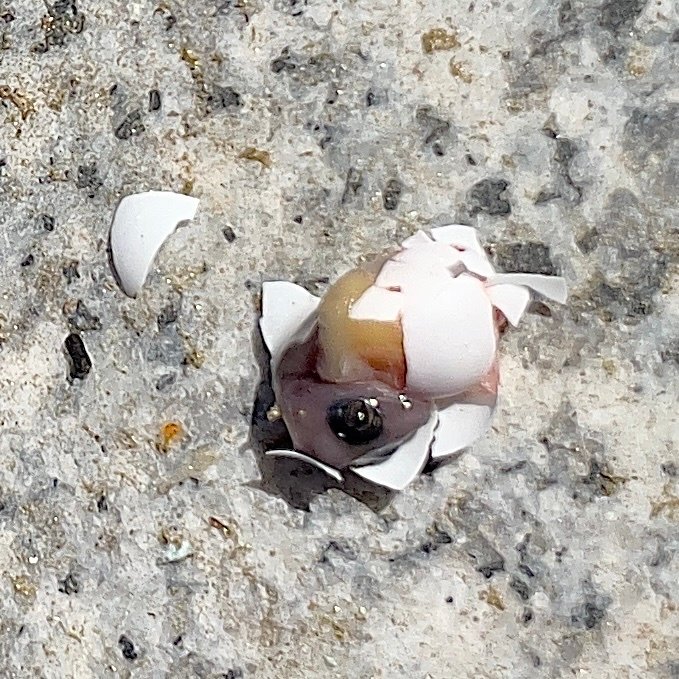
Female House Geckos lay two hard-shelled eggs at a time, often in hidden or protected locations. Common nesting sites include printer trays, curtain rods, wall sockets, and decorative vases. In shared environments, multiple females may deposit eggs in the same spot, creating communal nesting clusters.

The eggs incubate for several weeks before hatching into miniature replicas of the adults. Juvenile geckos grow rapidly and begin hunting within days. Their reproductive success contributes to the species’ rapid spread across Costa Rica, especially in urban centers where habitats and nesting sites abound.
🐦 Predators and Food Web Role
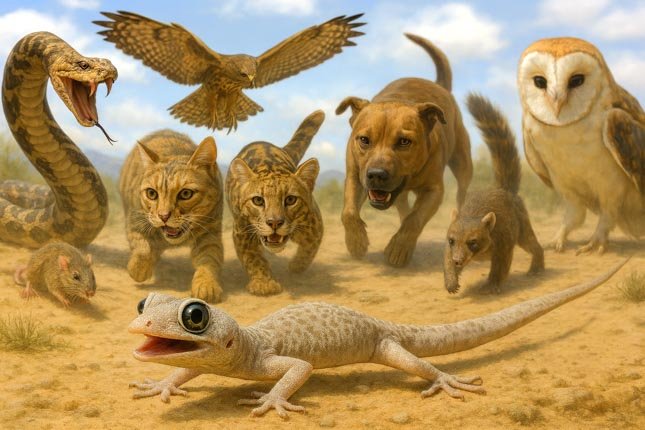
Despite their stealth and agility, House Geckos face threats from native predators. Birds such as great-tailed grackles and motmots often hunt geckos near windows and rooftops. Snakes, small mammals, and even larger spiders may also prey on them. This predation keeps gecko populations in check and integrates them into Costa Rica’s complex food web. As both predator and prey, House Geckos play a vital role in maintaining ecological balance.
🌎 They Are a Part of Our Ecosystem Now!
The success of Hemidactylus frenatus in Costa Rica reflects its remarkable adaptability and ecological importance. It thrives in human-modified environments without displacing native species (though there is some conflicting evidence here).
Its presence supports biodiversity by controlling insect populations and providing food for predators. As climate change and urbanization reshape habitats, species like the House Gecko demonstrate how wildlife can coexist with development. Understanding its behavior and ecological role helps promote sustainable living and wildlife-friendly architecture in tropical regions.
The House Gecko is both our evening entertainment and natural pest control – happily running too-and-fro and barking throughout the tropical nights. Would you mind sharing your home with a House Gecko? At RE/MAX WE SELL PARADISE, we list hundreds of tropical properties – homes, land, farms, estates & businesses . Start your journey to Paradise by browsing our property listings here.